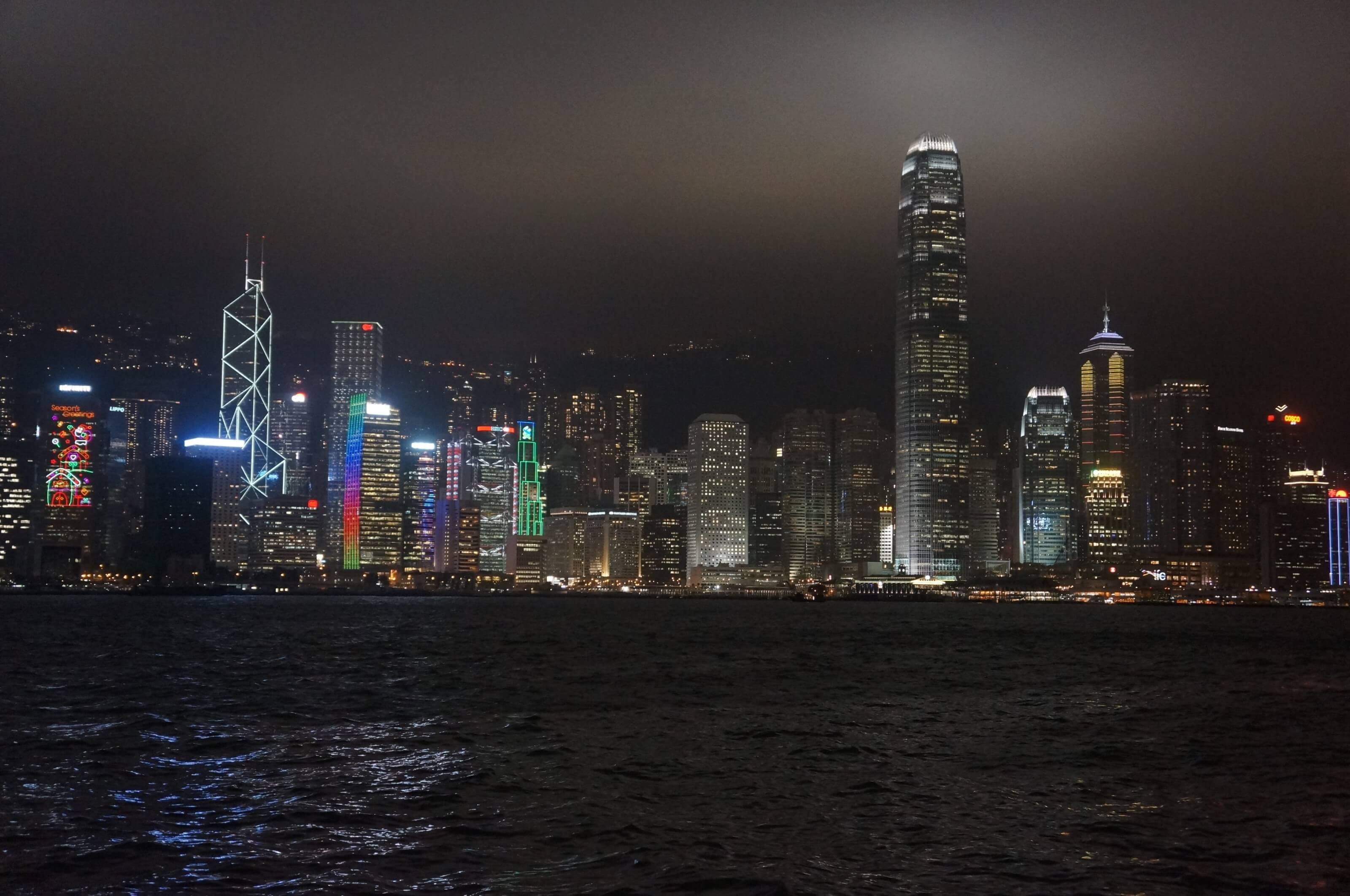
After spending 10 weeks in China and 4 days in Hong Kong, we were happy, sure — but also utterly exhausted! China is breathtaking, awe-inspiring, and wonderfully foreign, but it’s also an enormous country, and trying to see it all in just over two months is simply an impossible mission. From Guangzhou, we hopped on a flight to Taiwan. We were a little sad to leave China behind, but we were also genuinely excited about this next chapter! In Taipei, we got to reconnect with a friend who had moved there three years ago — and after two months of non-stop traveling, seeing a familiar face felt like the best gift we could have asked for. Anyway, enough chit-chat! Here’s our complete guide to visiting Taipei in 3 days, packed with all our tips, recommendations and itinerary. Enjoy the journey!
We took this trip in Taipei in 2014, but the article was completely revised and updated in March 2026. If you see any price changes or have additional information that might be relevant, please feel free to leave us a comment!
Introduction to Taiwan and Taipei
A little bit of history first: Taiwan was once known as “Formosa“. The name was given by Portuguese sailors who arrived on the island in 1554 and, struck by its natural beauty, christened it “Ilha Formosa” — meaning “beautiful island.” A fitting name, as you’ll soon discover.
Today, Taiwan’s official name is the “Republic of China“. You may well hear, particularly on the Chinese mainland, that Taiwan is considered the 23rd province of China. And for many people — ourselves included, at least before we visited — Taiwan tends to get lumped in with China.
There’s a common misconception that it’s simply a part of China that broke away politically a few decades ago. But let’s not get into the geopolitics here. Taiwan is very much its own independent state, and Taiwanese people will be the first — and most passionate — to remind you of that!
Taiwan vs. China
Now, while it’s true that the majority of Taiwan’s population has roots in mainland China, don’t for a second assume the cultures are the same! To be honest, Taiwan is a much gentler introduction to Asia for us Westerners. The difference hit us the moment we walked into a public restroom. That might sound silly — but anyone who’s traveled through China will know exactly what we mean! In China, you quickly get used to encountering bathrooms in a state you never imagined possible until you’ve seen it with your own eyes. And don’t even get us started on the smell… In Taiwan? Absolutely none of that!
Public toilets here are on par with European standards. Some are spotlessly clean, others are very clean, and a few are just average. But that’s it — nothing that would make you fear for your health just by walking through the door! After the emotional relief of finding decent restrooms, we made our way to the metro. And sure enough, another surprise was waiting for us: orderly lines on the platform floors and Taiwanese commuters waiting for their train in COMPLETE SILENCE. In Taipei’s metro, eating, drinking, and even chewing gum are strictly forbidden. It felt almost surreal after riding the subway in Beijing!
So it was with undeniable joy that we found ourselves, for a few blissful days, back in a clean apartment, speaking French with friends, surrounded by bakeries on every corner (hallelujah!), spotting Carrefour supermarkets, eating street food prepared in clean conditions, breathing in the general cleanliness of the streets, being let off the metro without being shoved, and finally free from the symphony of spitting and throat-clearing that had become our daily soundtrack. Taiwan is, without a doubt, a world away from China.
Busted by security
Speaking of the metro rules, Ben actually got caught by a security officer for chewing gum! It was honestly hilarious. You know that feeling of being a kid in primary school, getting scolded by your teacher for chewing in class and then sheepishly trudging over to throw your gum in the bin? Well, in Taipei, it’s exactly like that — except we were nearly 30, and the “teacher” was a metro official who chased after us, walkie-talkie in hand. I can only imagine the message his colleagues watching the security cameras must have sent him: “Control, control, we’ve got a chewer! Line 2, on the escalator… Tourist, big backpack, active gum situation… Agent Y, move it, intercept before he boards the train! GOOO!”
The best part? When the officer caught up to us, he asked Ben to spit out his gum — and held out his own hand to receive it. Ben looked around desperately for a bin. Of course, there wasn’t one, since food and drink are banned in the metro. And so, with great solemnity, he deposited his used gum directly into the poor man’s outstretched hand.
But Taipei is so much more than chewing-gum police, spotless bathrooms, and wonderfully polite commuters! Taiwan’s capital is a genuinely beautiful city that is absolutely worth a detour. We’d recommend spending at least 3 days there to get a real feel for everything it has to offer.
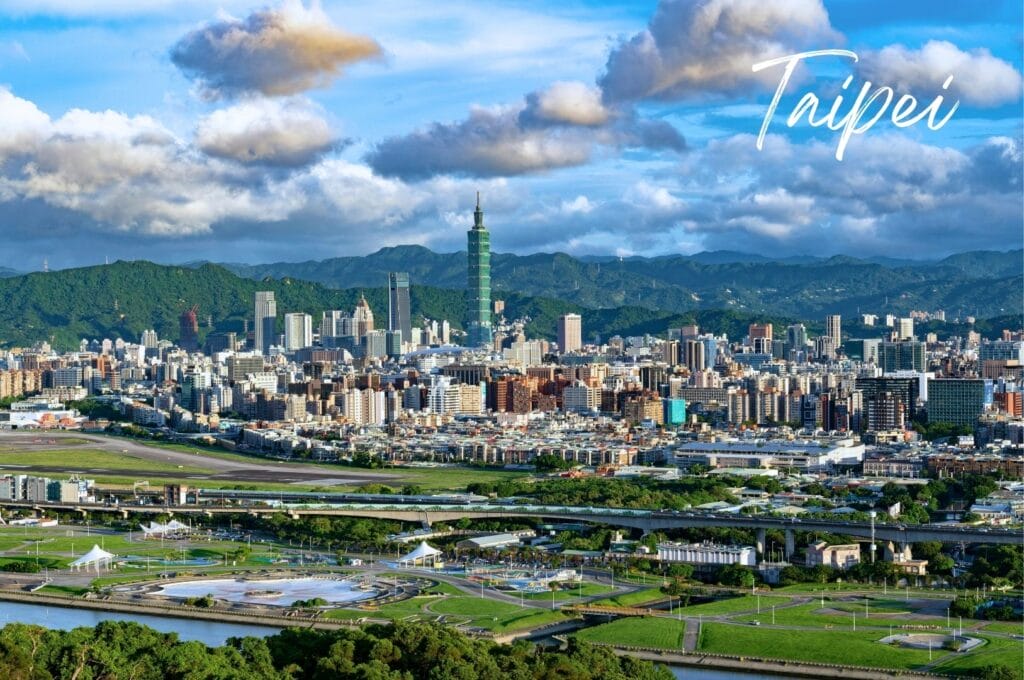
Day 1: Historic center and cultural visits
For your first day, we suggest starting in Taipei’s historic center, in the Zhongzheng district, before exploring the Wanhua district (the oldest in the capital) and Datong.
Join a free walking tour of the city center
Like in many cities around the world, Taipei has a great selection of free walking tours. The concept is simple: you join a guided tour of the city center at a set time, registration is completely free, and at the end, you leave a tip based on how much you enjoyed the experience. For us, it’s one of the best ways to get a feel for a new place and ask all the questions you didn’t know you had. We can’t recommend them highly enough!
In Taipei, you can choose between a classic daytime free tour or an evening tour centered around Longshan Temple and its surroundings.
Visit the Chiang Kai-Shek Memorial Hall
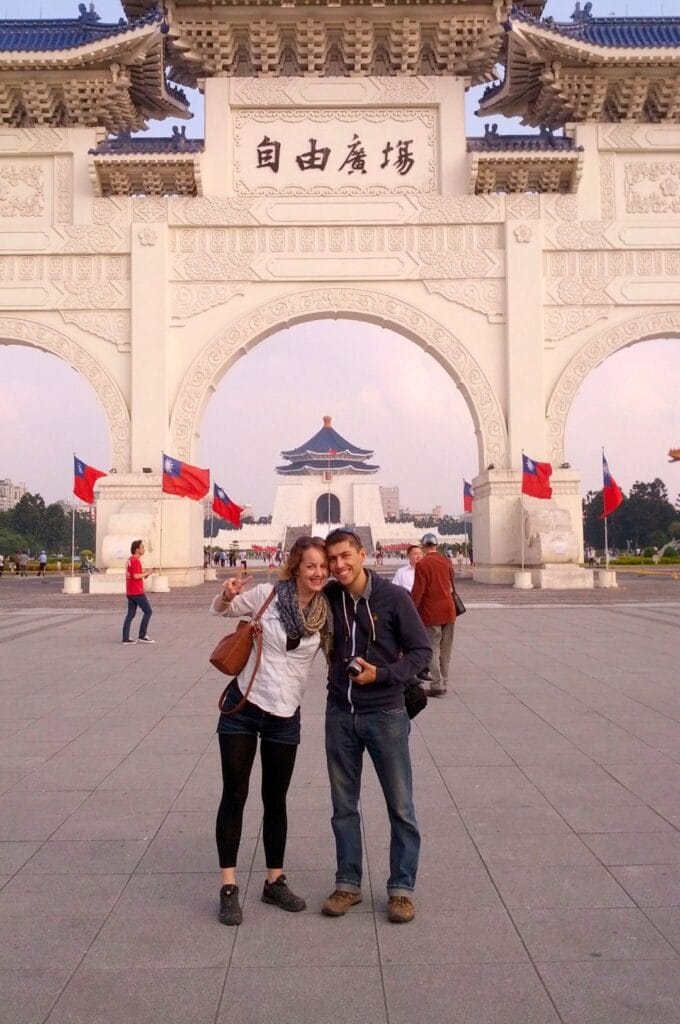
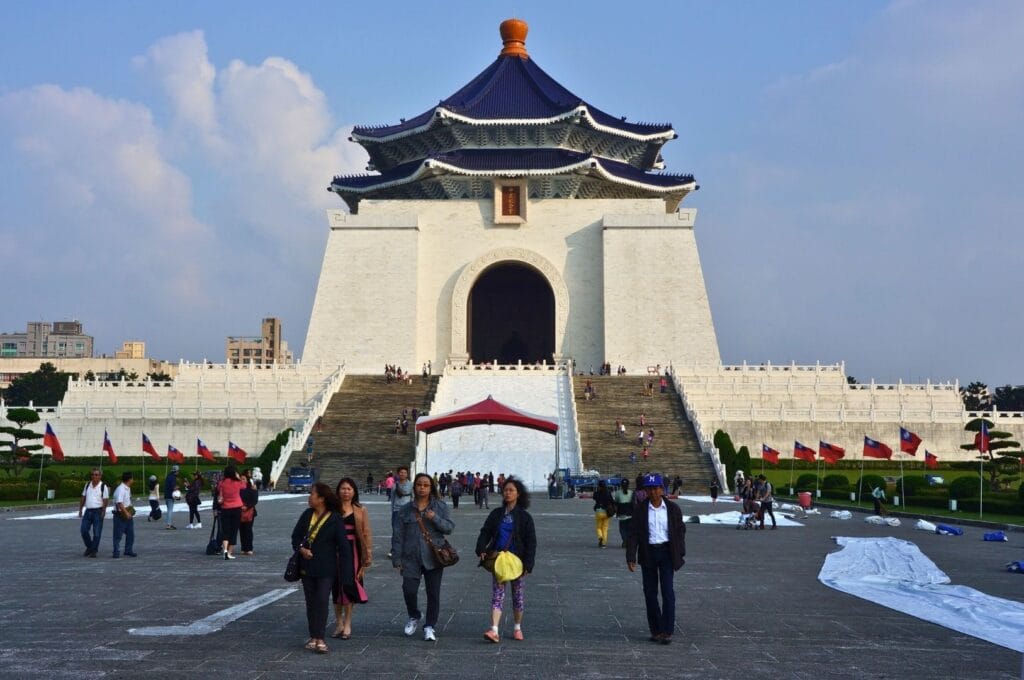
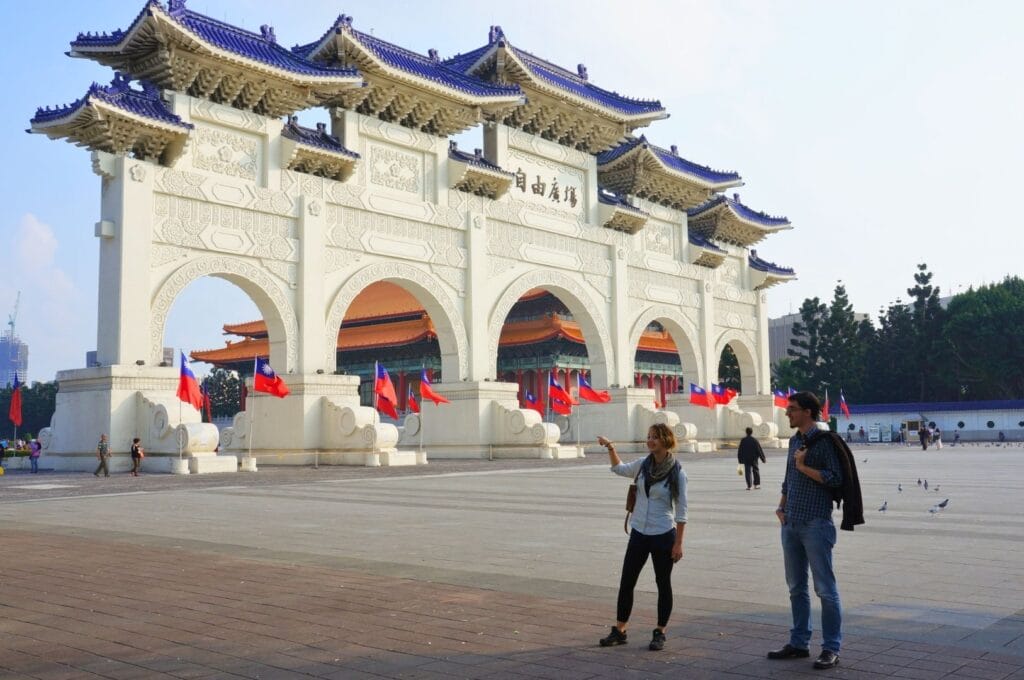
One of our first stops in Taipei was the Chiang Kai-Shek Memorial Hall. This striking white building towers over an enormous plaza framed by the iconic Liberty Square Archway — it has a faint resemblance to Beijing’s Tiananmen Square, though it’s nowhere near as vast. What makes the memorial particularly interesting is the exhibition in the basement, dedicated to the life of Chiang Kai-Shek. This military leader and statesman officially became the first president of the Republic of China (i.e., Taiwan) in 1948, following his defeat by Mao Zedong. The various rooms offer a fascinating glimpse into Taiwan’s history and its path to independence.
- Opening hours: Open daily from 9 a.m. to 6 p.m.; the surrounding park is open daily from 5 a.m. to noon.
- Entry: free.
- How to get to the Chiang Kai-Shek Memorial Hall: Take the red or green MRT line and get off at Chiang Kai-Shek Memorial Hall station. Exits 3 and 5 are the closest (less than 5 minutes on foot).
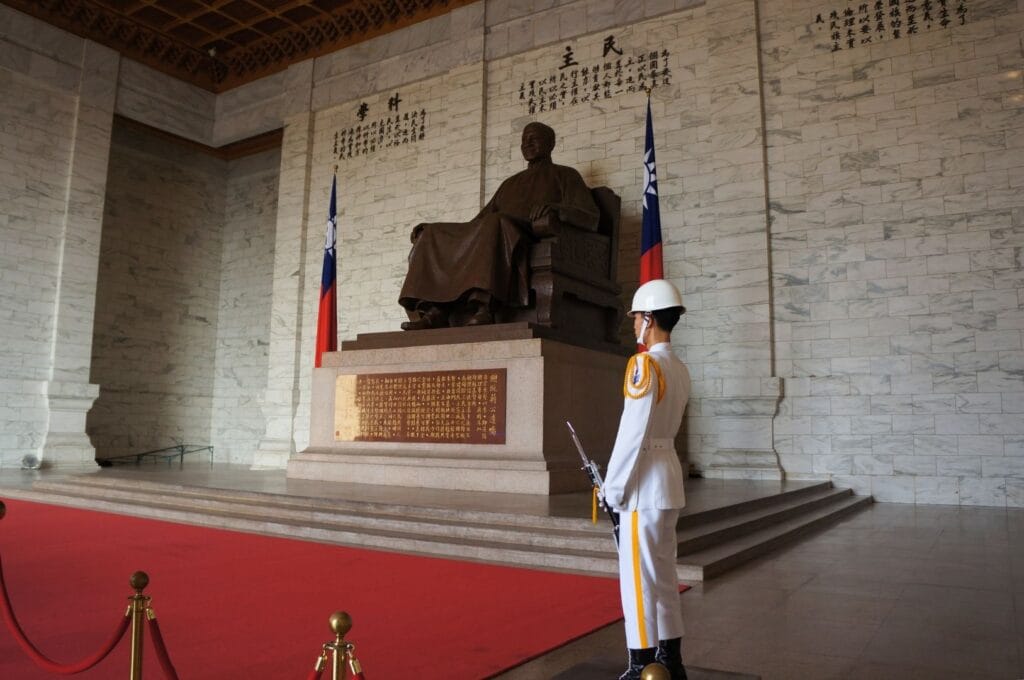
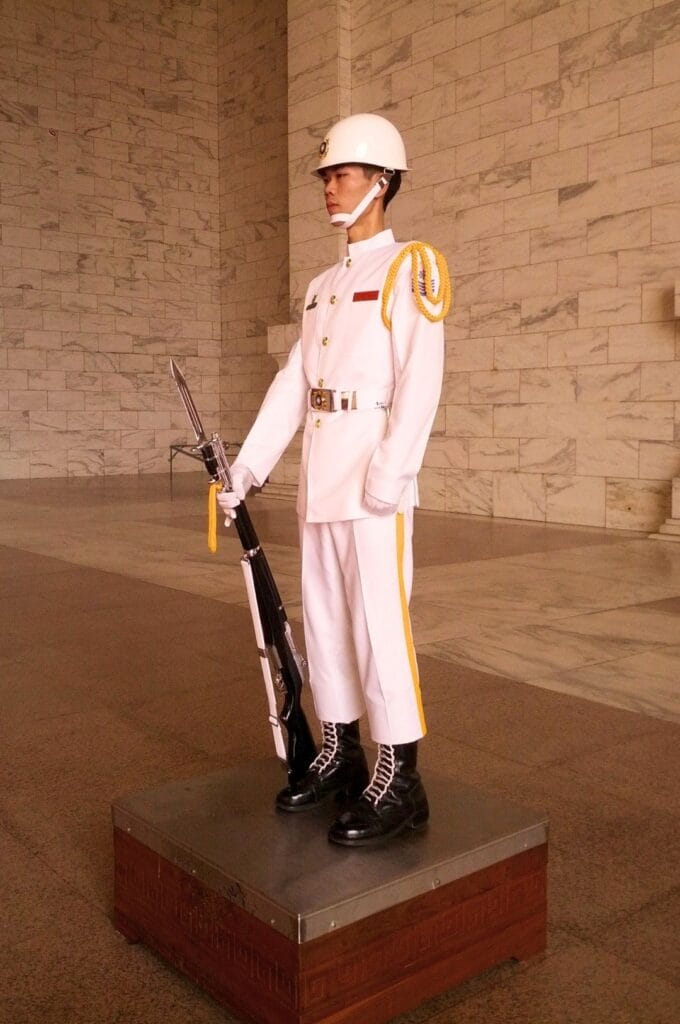
- Tip: Since 2024, you can watch the changing of the guard ceremony, which takes place every hour from 9 a.m. to 5 p.m. in front of the memorial’s main staircase.
Visit the National Taiwan Museum
Full disclosure — we didn’t actually visit the National Taiwan Museum, though looking back, we probably should have! There are so many museums in Taipei, and if we were doing it again, we’d be torn between this one and the National Palace Museum. That said, the Palace Museum is pricier, extremely busy, a bit out of the way, and focuses more on Chinese art than Taiwanese history. For those reasons, we’d actually lean toward recommending the National Taiwan Museum — it’s smaller, more digestible, and really brings the island’s culture and history to life. Whether or not you go inside, make sure you take a stroll through the beautiful 228 Peace Memorial Park that surrounds it. Allow about two hours in total.
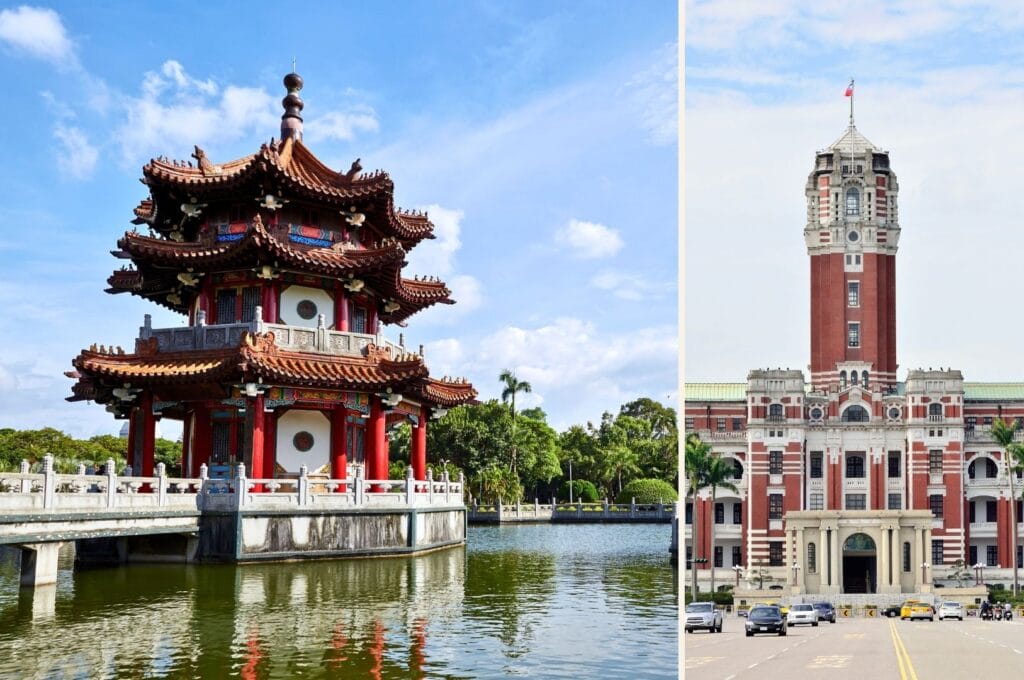
Quick tip: You’ll likely spot it peeking above the nearby streets — the Presidential Office Building is just one block to the southwest of the park. It’s not worth a long stop, but its architecture is genuinely worth a glance.
- Opening hours: The National Palace Museum is open from Tuesday to Sunday, 9:30 a.m. to 5 p.m.
- Entry: 30 TWD, which also includes access to the natural history museum located across the street (Land Bank Exhibition Hall of the National Taiwan Museum).
- How to get to the National Palace Museum: Take the red line and get off at NTU Hospital station. Use Exit 1 and walk through the park to reach the museum. Alternatively, take the dark blue line to Taipei Main Station and walk up Gongyuan Road.
Note: Admission is included with the FunPass.
Visit Longshan temple (Lungshan temple)
On your way from the National Taiwan Museum to Longshan Temple, take a short detour through the Bopiliao Historical Block — one of Taipei’s oldest streets, dating back to the Qing dynasty and fully restored. It only takes 5–10 minutes to walk through, but it’s a lovely, enriching little stop. Note that it’s closed on Mondays and open Tuesday to Sunday from 9 a.m. to 6 p.m.
Now, neither of us would describe ourselves as particularly spiritual. But ever since we arrived in Asia, we’ve visited more temples than we’ve been to church in our entire lives combined. And honestly? We’ve come to love it. There’s something deeply special about exploring a temple’s architecture, quietly observing devotees making offerings, or simply soaking up the sense of calm.
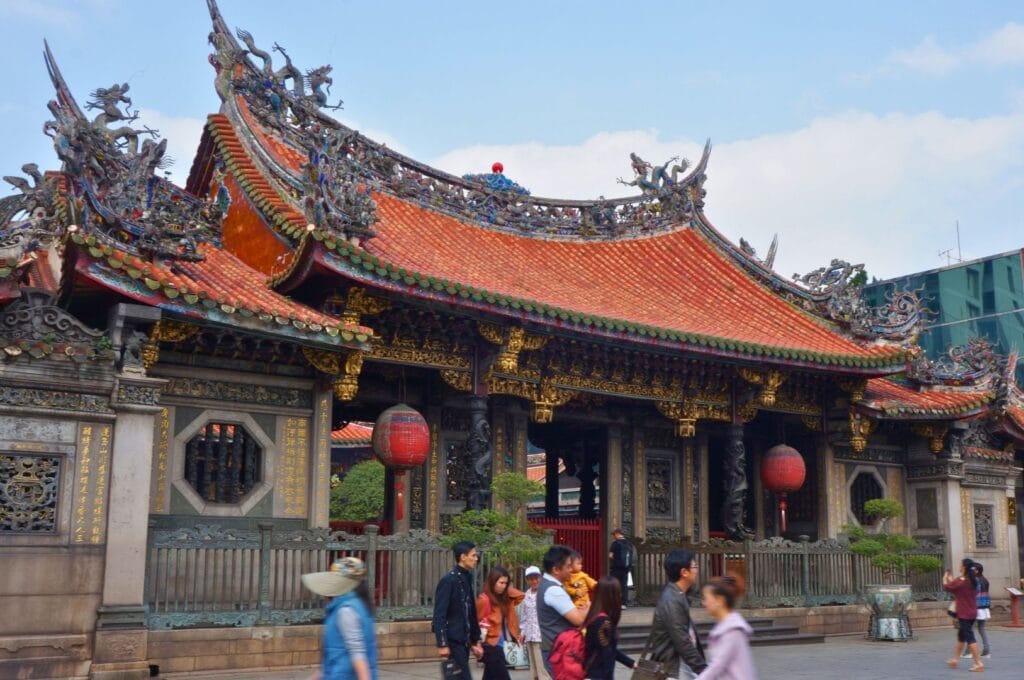
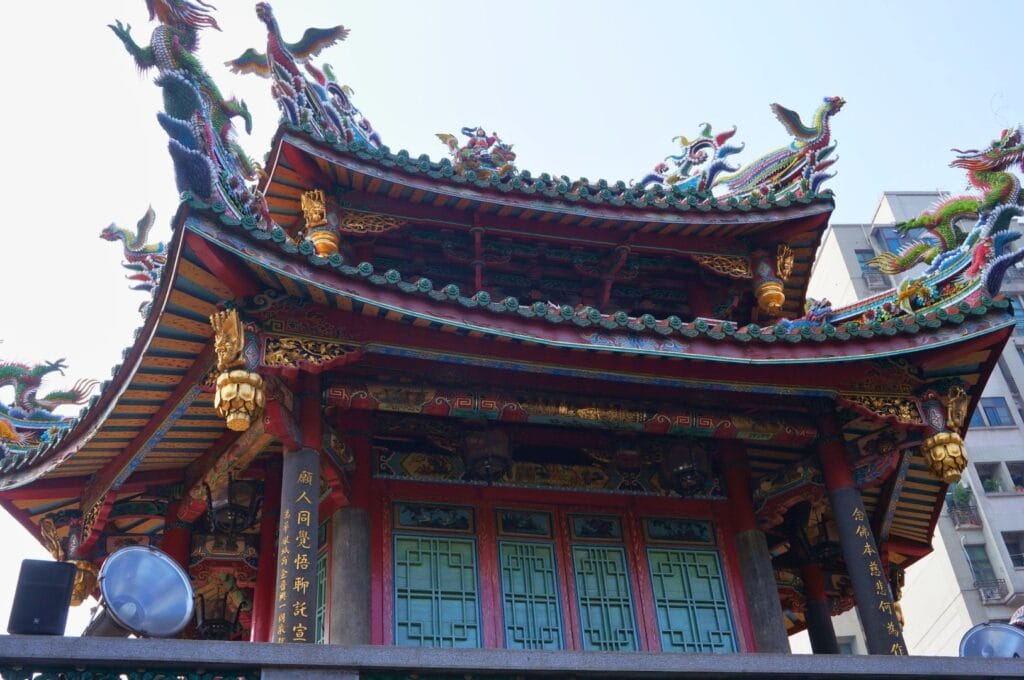
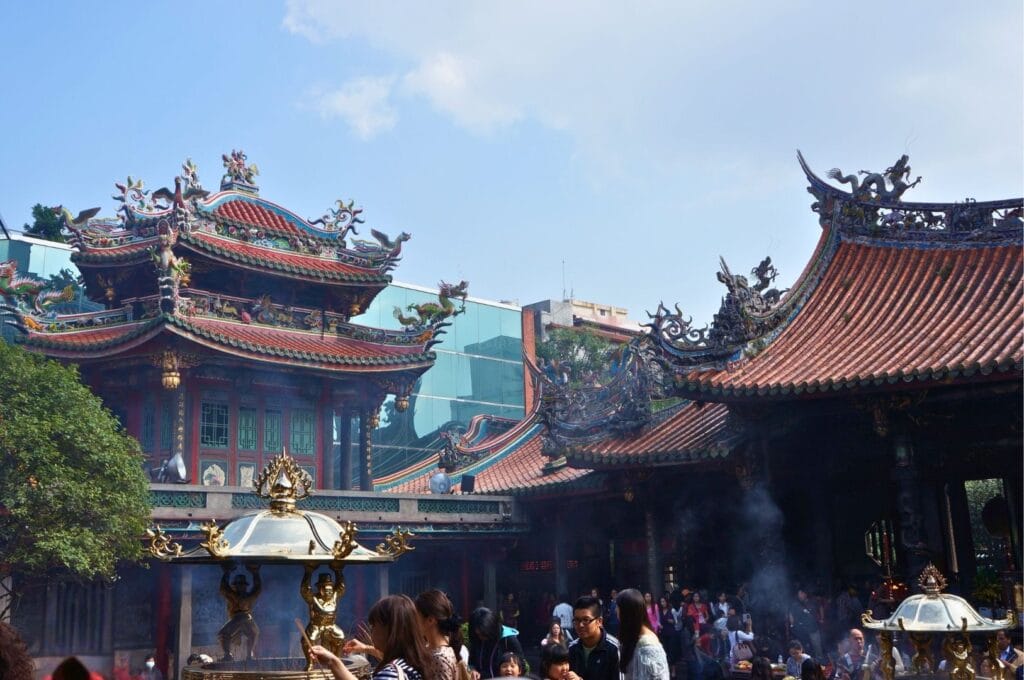
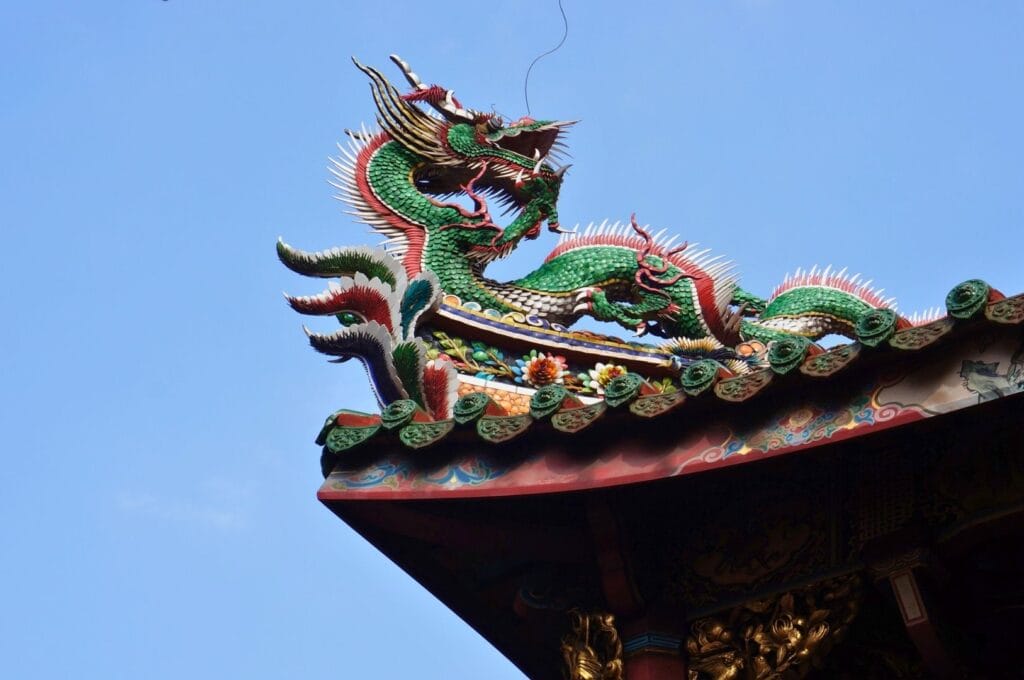
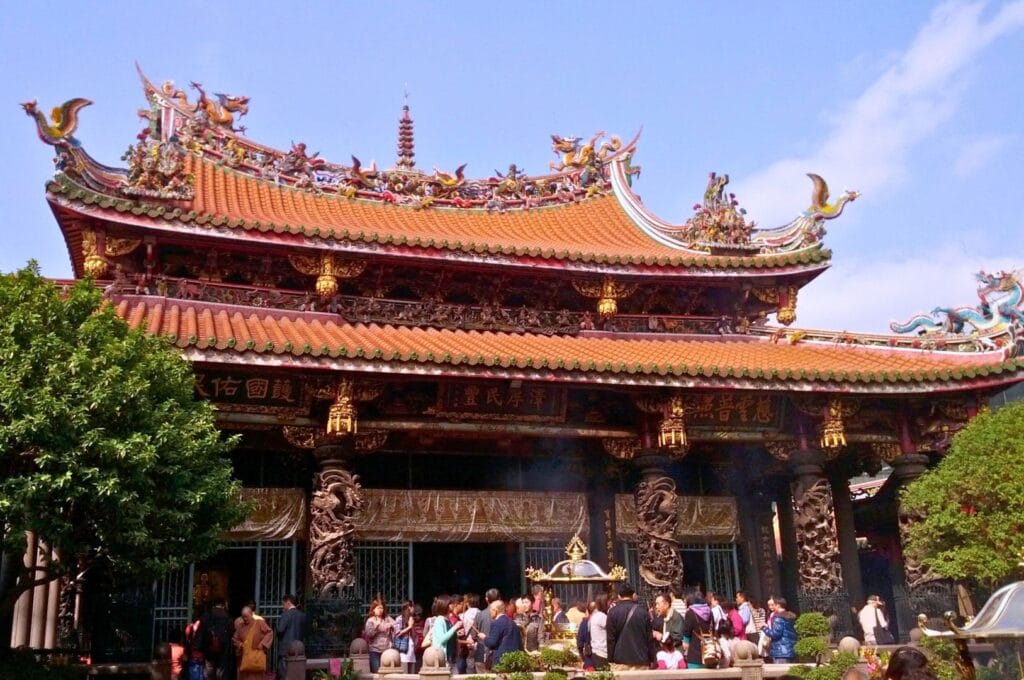
Longshan Temple, one of the most important and ancient religious sites in Taiwan, is no exception. It sits in the middle of the surrounding urban buzz, yet inside its walls, a wonderfully peaceful atmosphere reigns. Dedicated to both Buddhism and Taoism, you may find devotees there who are happy to explain the offering traditions. Look up, too — the architectural details are truly stunning. This is one you really shouldn’t miss!
Tip: If your schedule allows, try to attend the chanting ceremonies that take place in the Main Hall daily at 6:00–6:45 a.m., 8:00–8:45 a.m., and 3:45–5:00 p.m.
- Opening hours: Longshan Temple is open daily from 6 a.m. to 10 p.m.
- Entry: free (donations are warmly appreciated).
- How to get to Longshan Temple: Take the blue MRT line and get off at Longshan Temple station, Exit 1 (2 minutes on foot).
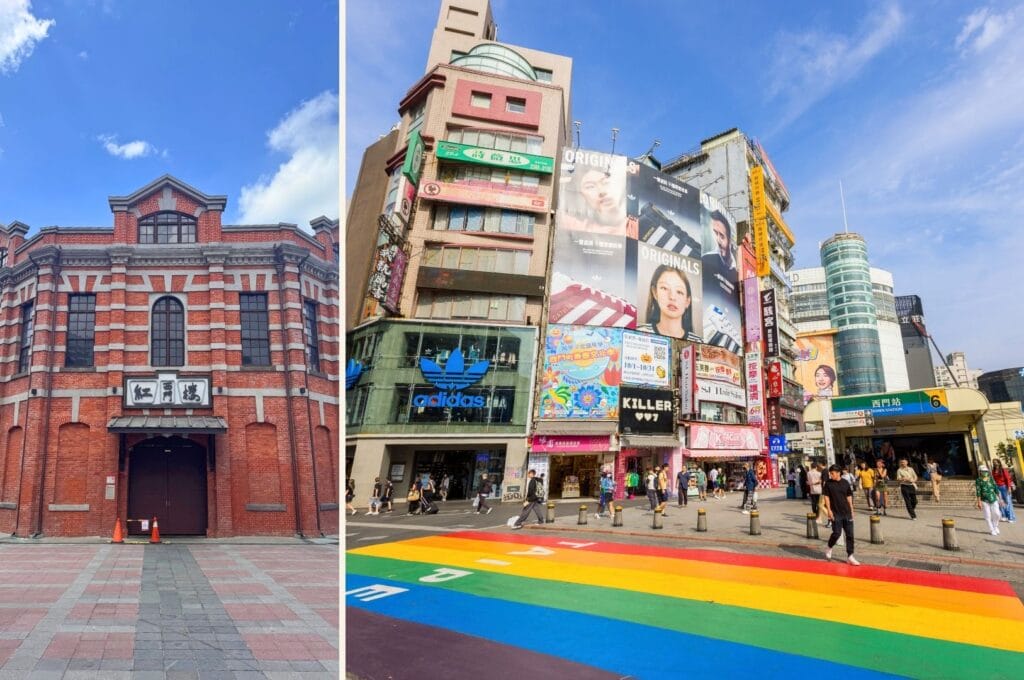
Explore the Ximending district
Head to Taipei’s answer to Times Square — but first, make sure to pass by the Red House! This striking octagonal brick building was constructed by the Japanese in 1908 as a market, later converted into a cinema, and finally closed in 1997. Today it’s a creative hub celebrating art, local designers, and is home to a renowned tea house. You’ll find it right next to Ximen station (blue and green lines), at a crossroads that very much has a New York energy.
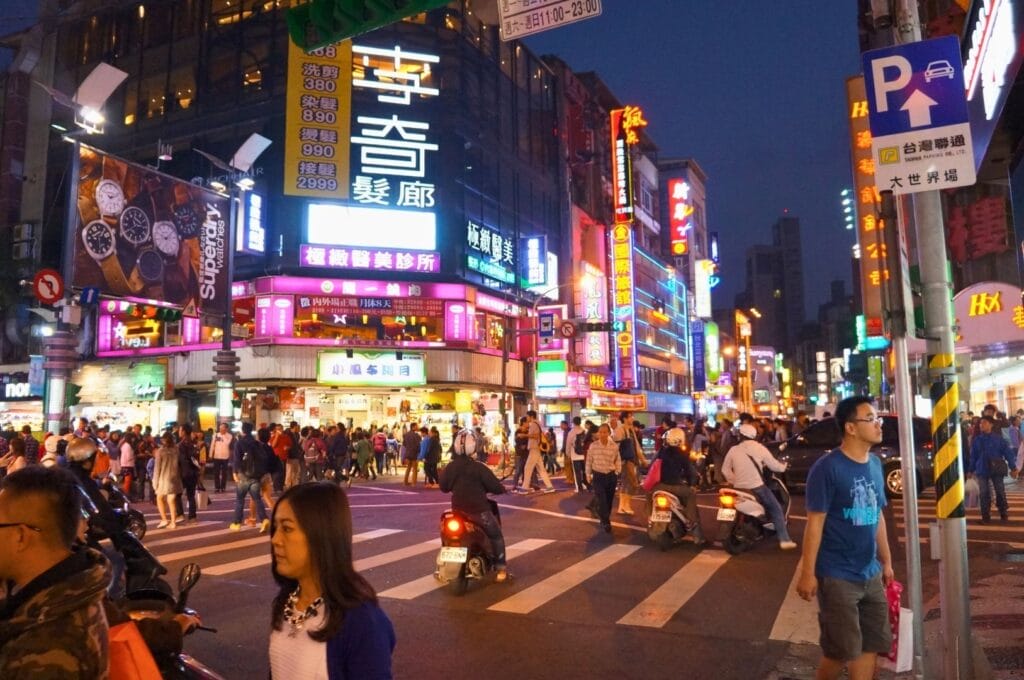
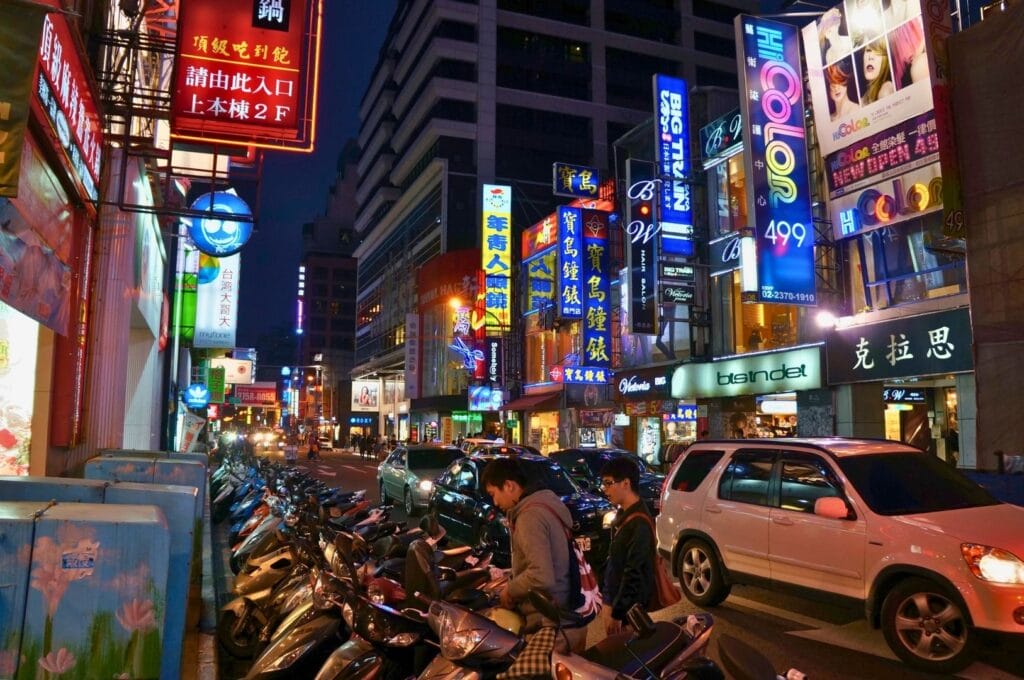
From there, cross Chengdu Road into the Ximending Walking District — the Shibuya-meets-Times Square heart of Taipei. The streets are pedestrianized and bursting with street food stalls and shopping. This is undeniably the most lively and dynamic neighborhood in the city.
Tip: Come back after dark to see the neighborhood light up — it takes on a completely different, electric atmosphere once the sun goes down.
This article contains affiliate links to partner sites. When you use our links to book accommodation, a car, or an activity, you don’t pay anything extra, but we get a small commission. This helps us to offer you free, independent, and ad-free content. Thank you for your support!

Day 2: Tea, Taipei 101, and Sunset Views
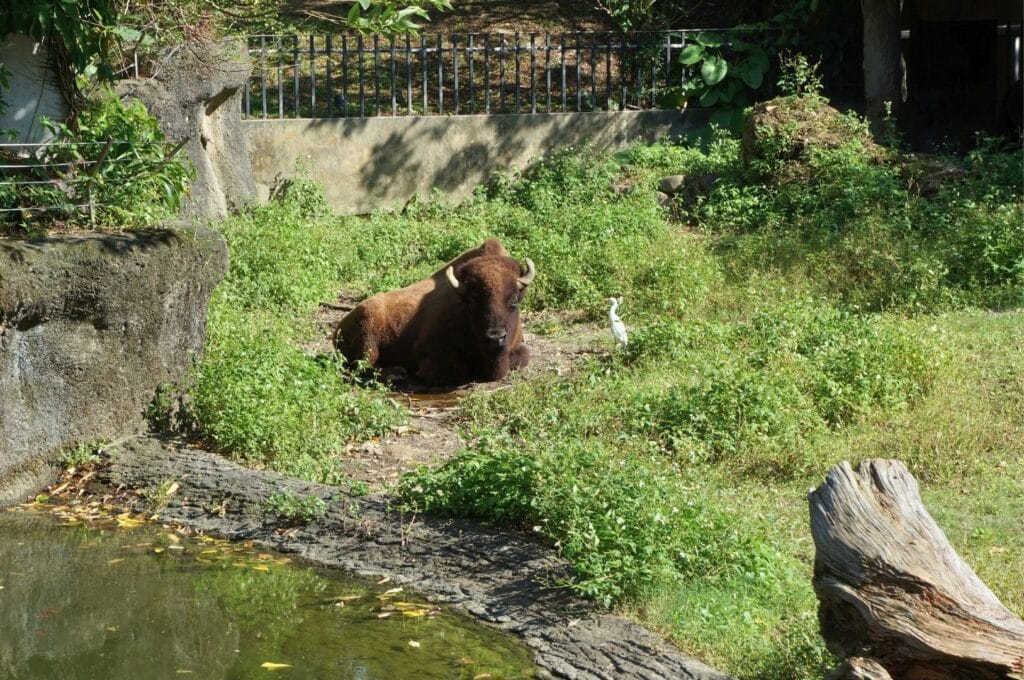
Visit Taipei Zoo
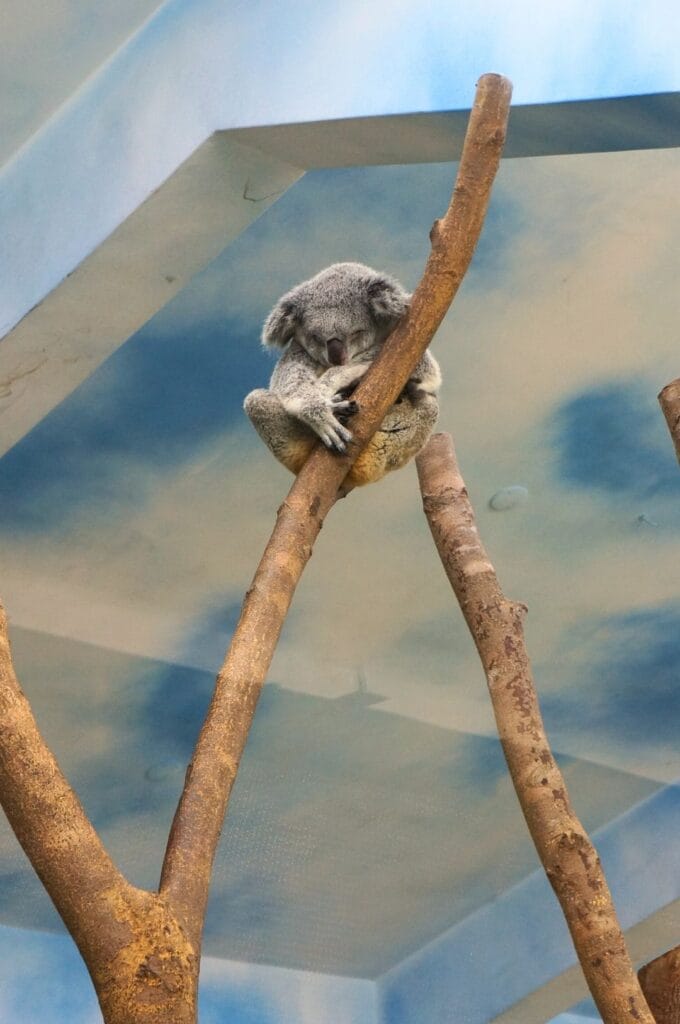
We’re big kids at heart, and there was no way we were passing up a day at the zoo. From the outside, you might expect the usual: cramped enclosures, a handful of tired animals, nothing too exciting. But Taipei Zoo is anything but ordinary. It’s massive — you could genuinely spend a whole day there! We focused on a few key areas and got to see two giant pandas who had come all the way from Chengdu. Before heading up into the hills on the Maokong Gondola, we’d definitely recommend a stop here.
- Opening hours: Taipei Zoo is open daily from 9 a.m. to 5 p.m.
- Entry: 100 TWD for adults; free for children under 5; discounts available for children aged 6 and over. You can pay with your EasyCard.
- How to get to Taipei Zoo: Get off at Taipei Zoo station (brown MRT line). Allow at least 40 minutes from the Ximending area.
Note: Admission is included with the FunPass.



Sip tea among the Muzha tea plantations
If you’re a tea lover, Taipei has a real treat in store for you. In the rolling hills of Maokong overlooking the city, beautifully terraced tea gardens stretch across the hillsides, and several well-regarded tea houses invite you to taste some truly exceptional brews.
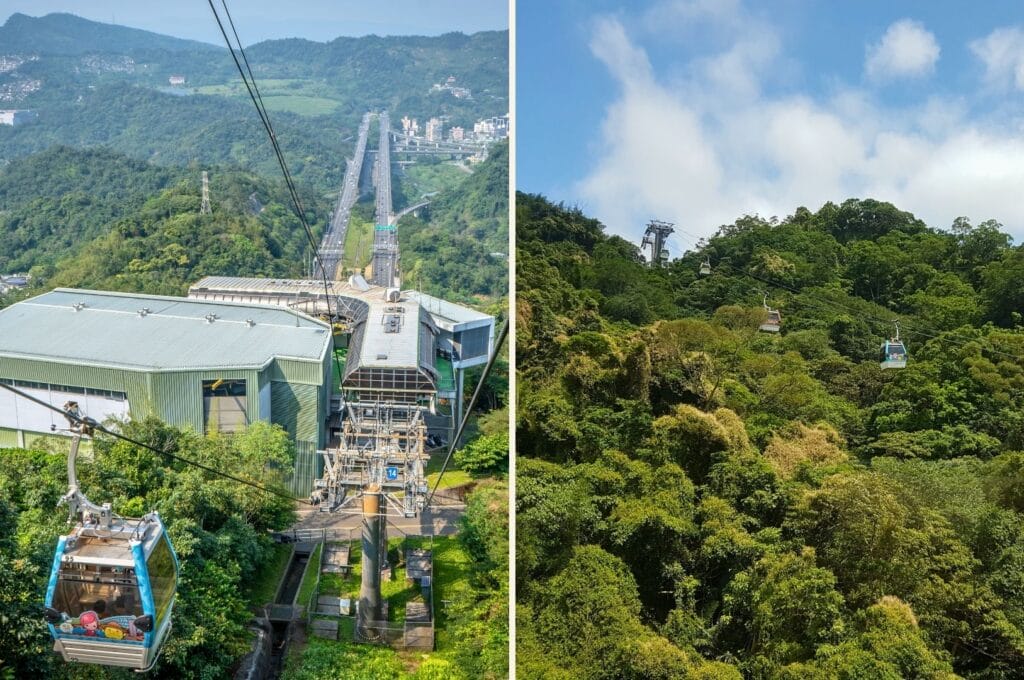
Getting there is easy: take the metro to Taipei Zoo and hop on the Maokong Gondola up to the hilltop. We’re usually the type to walk everywhere when we can, but the gondola ride itself is genuinely worth it.
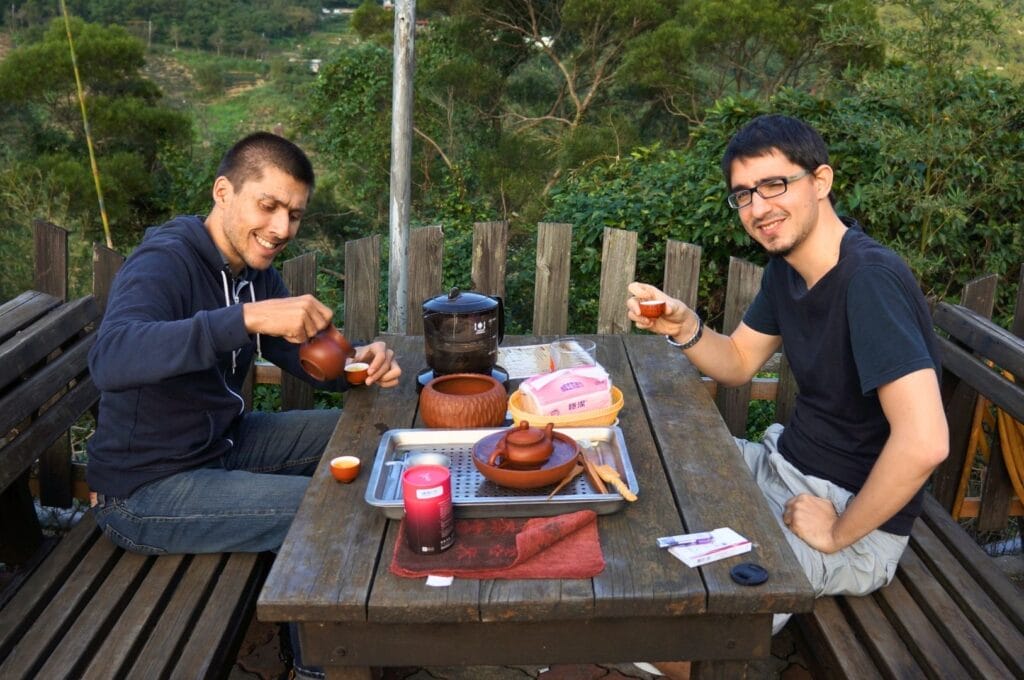
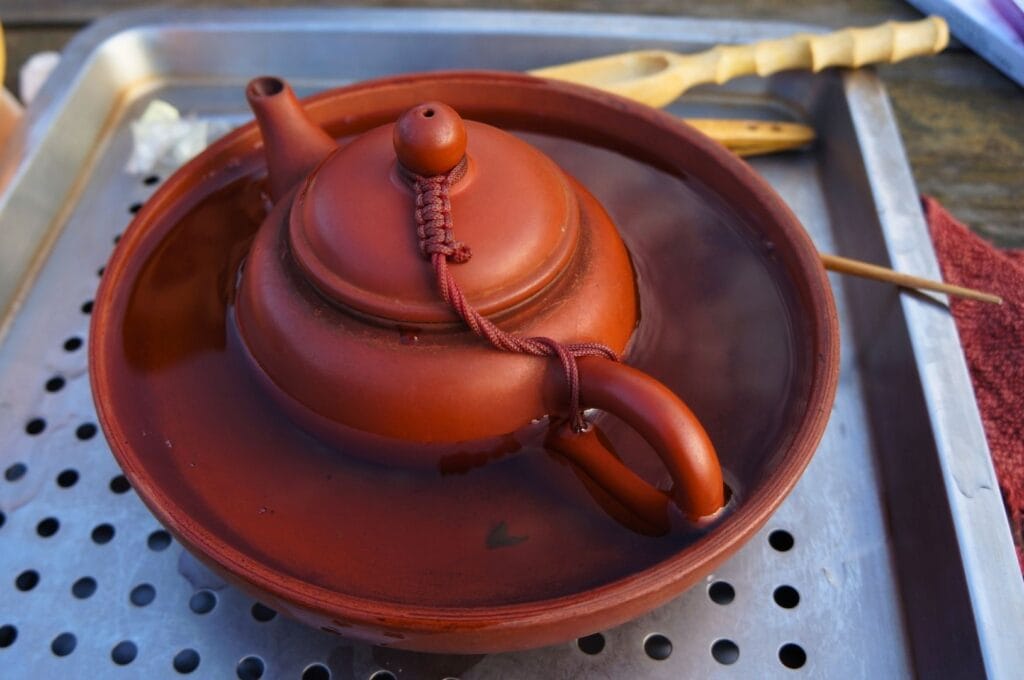
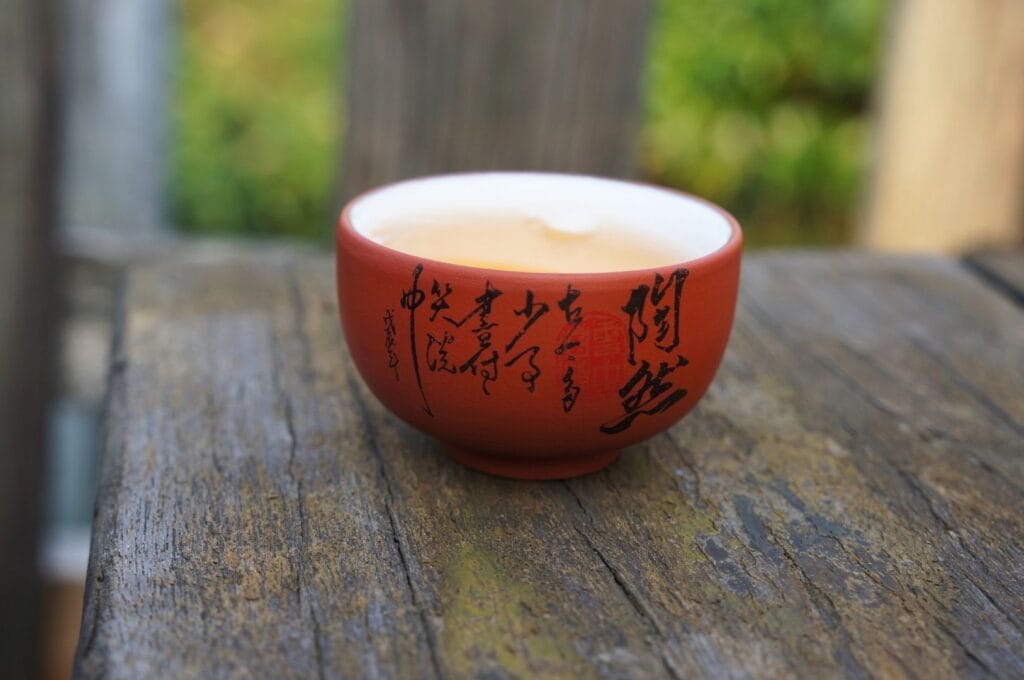
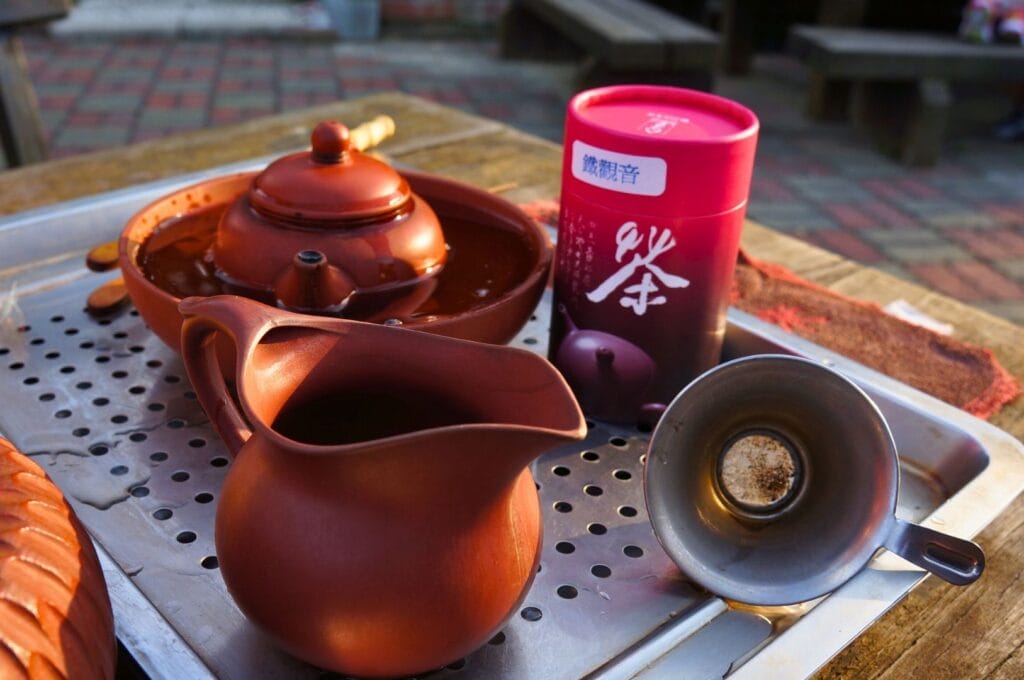
Since we had only recently learned to tell the difference between a real tea and your standard supermarket teabag, we didn’t feel quite ready to invest a small fortune in a handcrafted teapot! We kept it simple with a cup of classic green tea. One of Taiwan’s signature specialties is oolong — a semi-oxidized tea that sits beautifully between green and black tea. What makes the experience even more memorable is that they walk you through the tea ceremony, demonstrate it once, and then hand it over to you: “Go on, you try!” We’re certainly not ready for a royal tea party just yet, but we learned the basics — and honestly, all the tea houses seem equally lovely. The views from up there are pretty spectacular too.
If you have time, there are also several hiking trails in the area worth exploring:
- The Camphor Trail (marked in green on the map below): a scenic 4.5 km round-trip path with minimal elevation gain, leading to Zhangshan Temple.
- The Yinhe Cave Trail (in light blue): a more challenging route leading to a stunning site featuring a cave, a temple, and a waterfall. Allow about 1.5 hours for the 3.7 km round trip with 280 m of elevation gain — yes, more steps.
- Opening hours: Maokong Gondola is open from Tuesday to Sunday, 9 a.m. to 9 p.m.
- Entry: Choose between a standard cabin (180 TWD) or a glass-floor cabin (230 TWD) for a one-way trip. For a return journey (which we’d recommend to save time), get the 300 TWD pass. You can buy skip-the-line tickets online or regular tickets on-site. EasyCard accepted..
- How to get to the Maokong Gondola: Head to Taipei Zoo station (brown MRT line) and follow signs to the gondola terminal. If you’d like to explore Taiwanese tea culture in depth, we’d suggest this guided tour to uncover all the secrets of this ancient tradition.
Note: Admission is included with the FunPass.
Take in the view from the top of Taipei 101
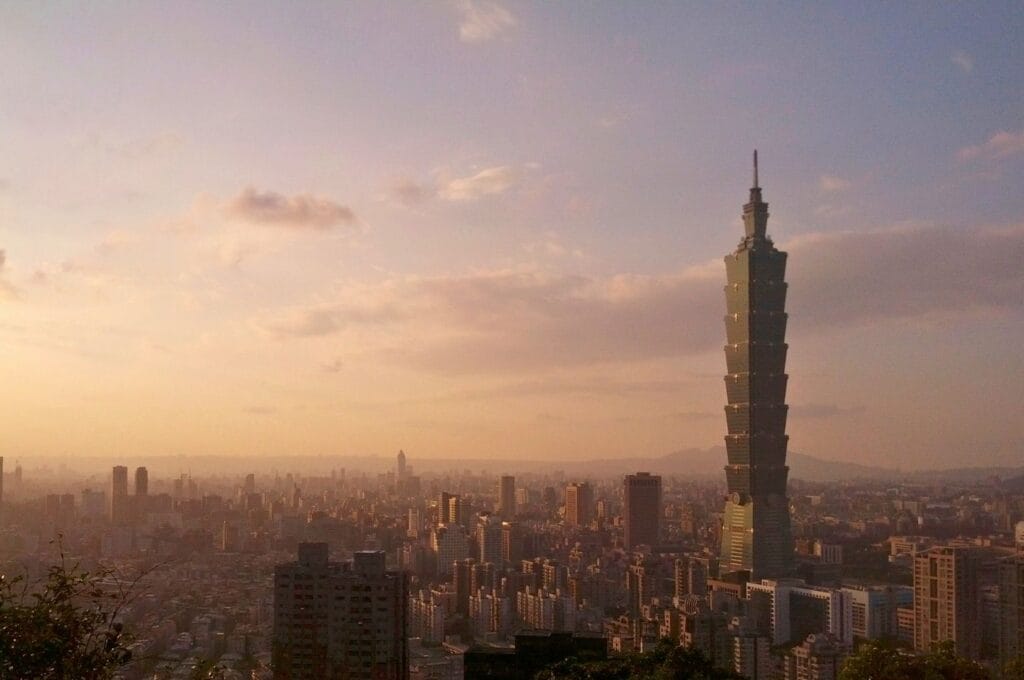
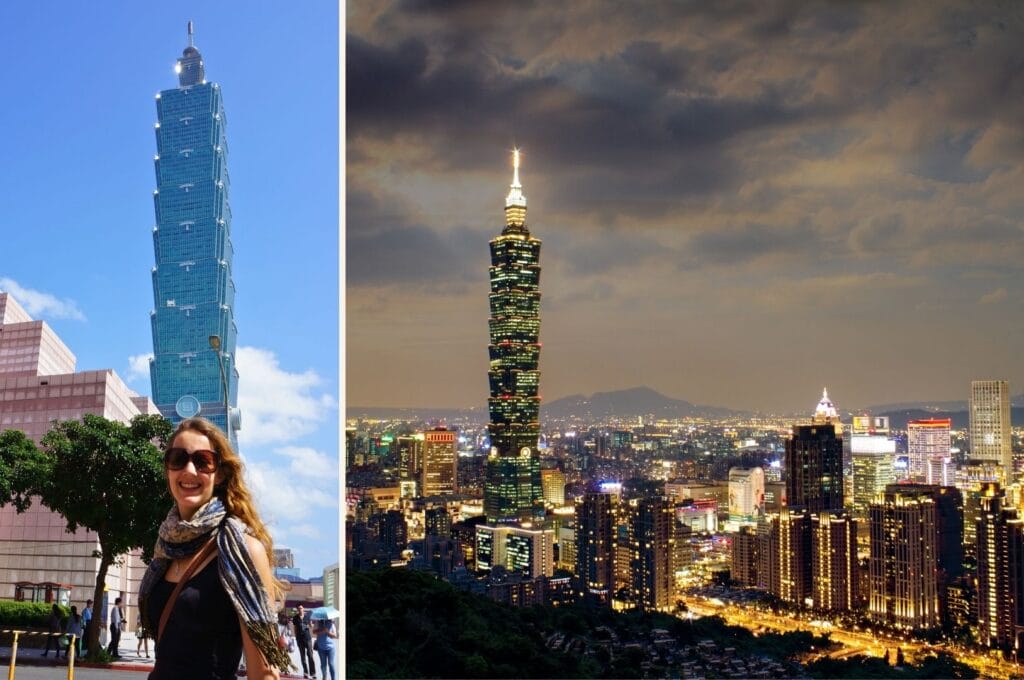
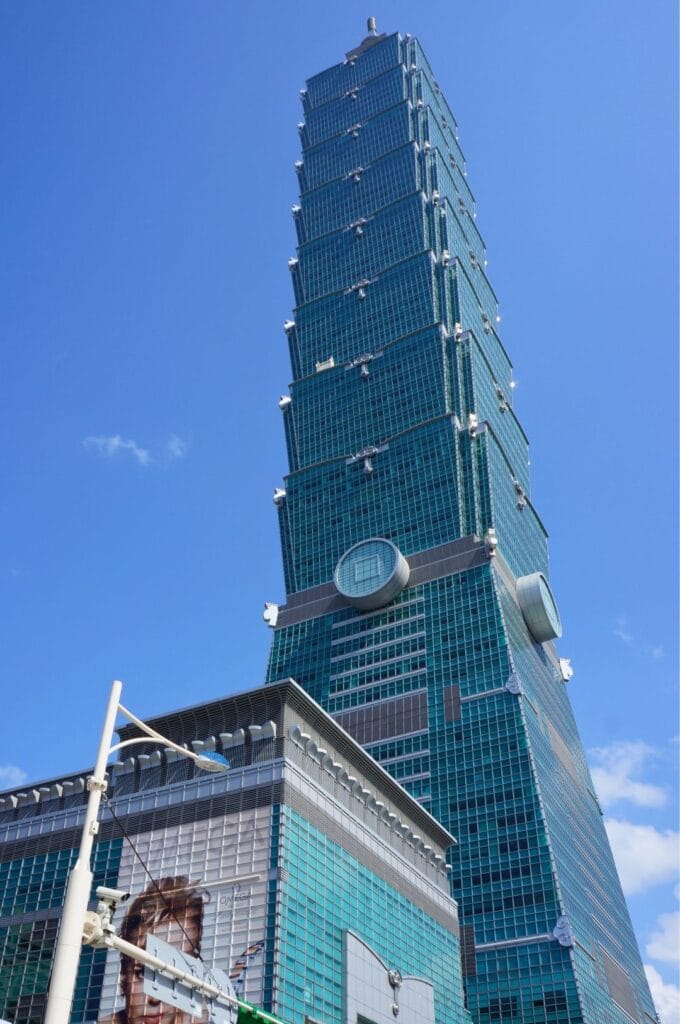
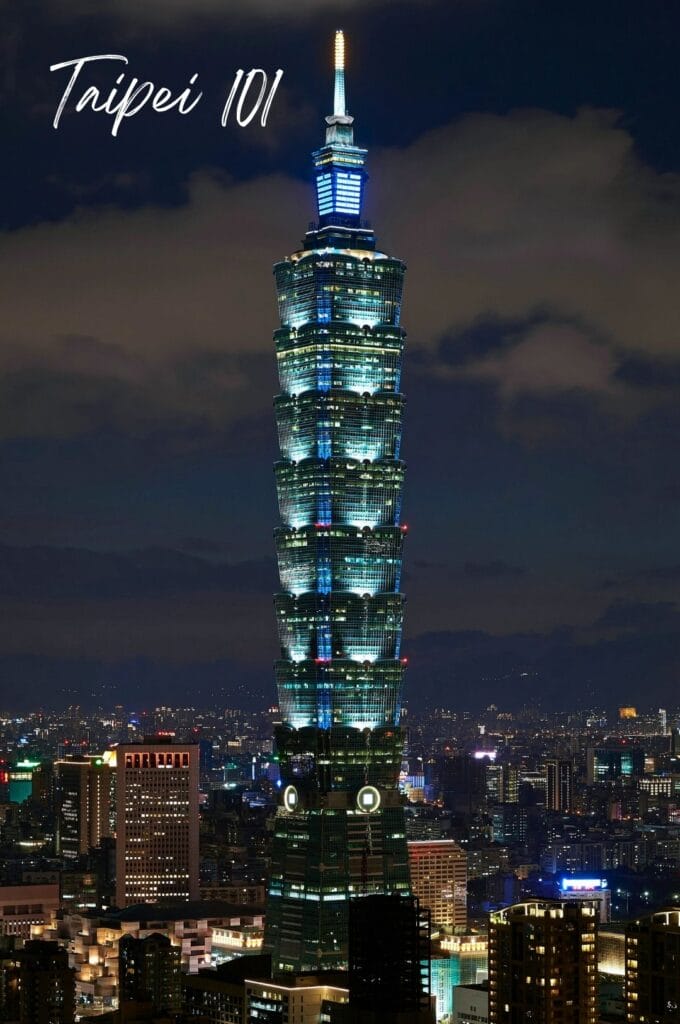
Taipei is also home to Taipei 101 — currently the 12th tallest building in the world at a whopping 508 meters. (It held the second spot just over a decade ago.) As the name suggests, it has 101 floors. Personally, I’m not entirely sold on the bamboo-inspired design, but I have to admit — it really is impressive. We already felt tiny standing next to the ICC Tower in Hong Kong; Taipei 101 outdoes it by about twenty meters.
You can visit the tower, though it does come at a cost — which is exactly why we stayed at street level! All the practical details are below. From the inside, you can access an indoor observation deck on the 89th floor (382 meters up) and an outdoor observatory on the 101st floor — the Skyline 460, at 460 meters. The elevator is one of the fastest in the world: it takes just 37 seconds to travel from the 5th to the 89th floor.
While you’re in the area, it’s well worth making a short detour to the Sun Yat-Sen Memorial Hall, about 15 minutes on foot from Taipei 101. It’s smaller than the Chiang Kai-Shek Memorial but worth a visit for anyone interested in the father of modern China, and the surrounding park is lovely — with a guaranteed view of Taipei 101 as a backdrop.
- Opening hours: Taipei 101 is open daily from 10 a.m. to 9 p.m.
- Entry: Around €16 (600 TWD) per person to reach the 89th floor; around €80 (3,000 TWD) for the outdoor platform on the 101st floor. On paper, the 89th floor doesn’t sound too bad — but standing there in person, when the price is quoted in local currency and you’re mentally comparing it to the cost of a night’s accommodation or a meal out, it feels steep. So we gave it a miss! If you do want to go up, you can buy tickets online here or via the Skyline link — including skip-the-line options with free cancellation up to 24 hours in advance. We’d strongly recommend keeping an eye on the weather and only going up on a clear day. Paying €16 to stare into cloud cover would be a real shame ;).
- How to get to Taipei 101: Take the red MRT line and get off at Taipei 101/World Trade Center station, Exit 4, right at the foot of the tower.
Note: Admission is included with the FunPass.
Watch the sunset from Elephant Mountain
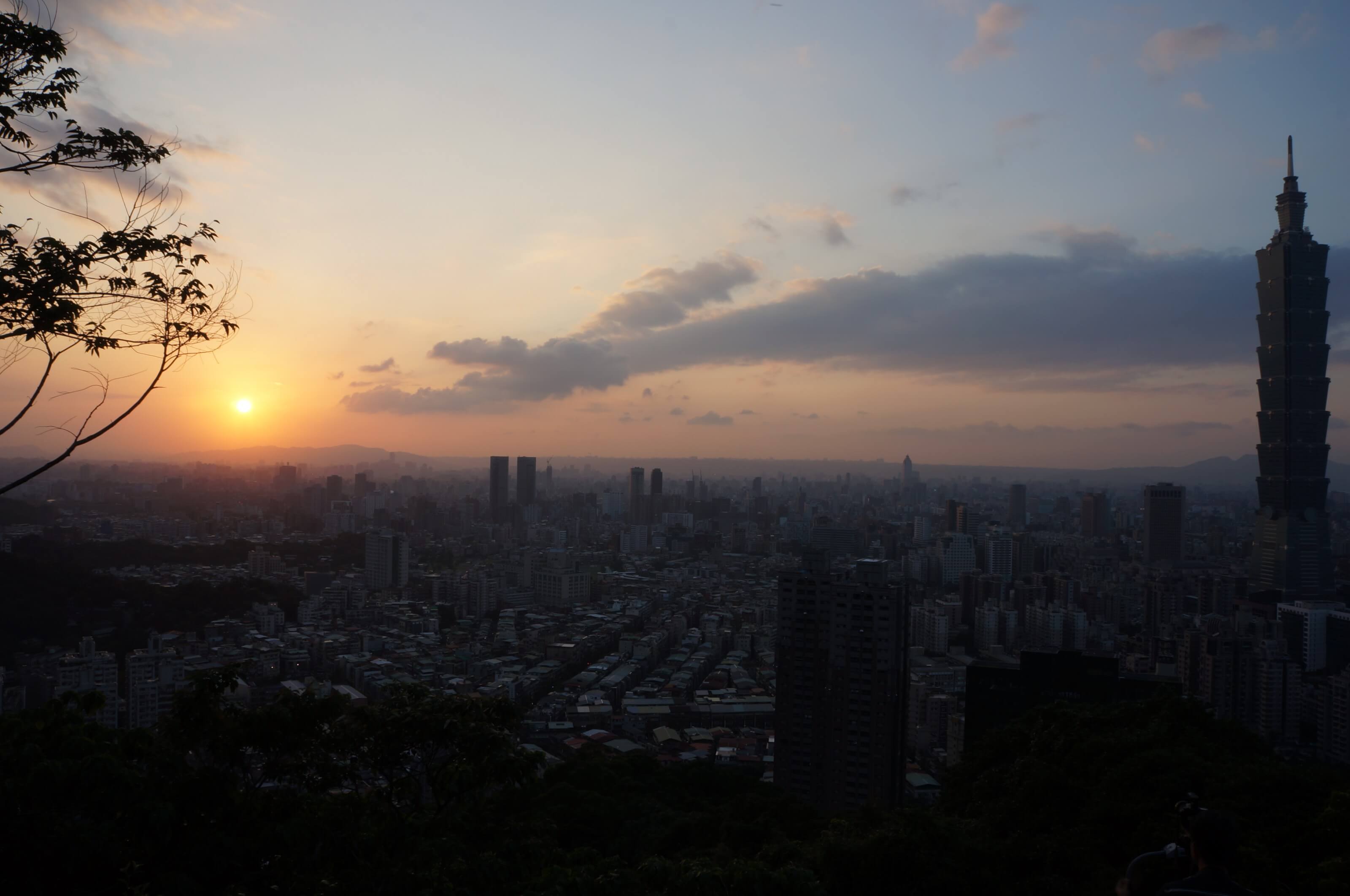
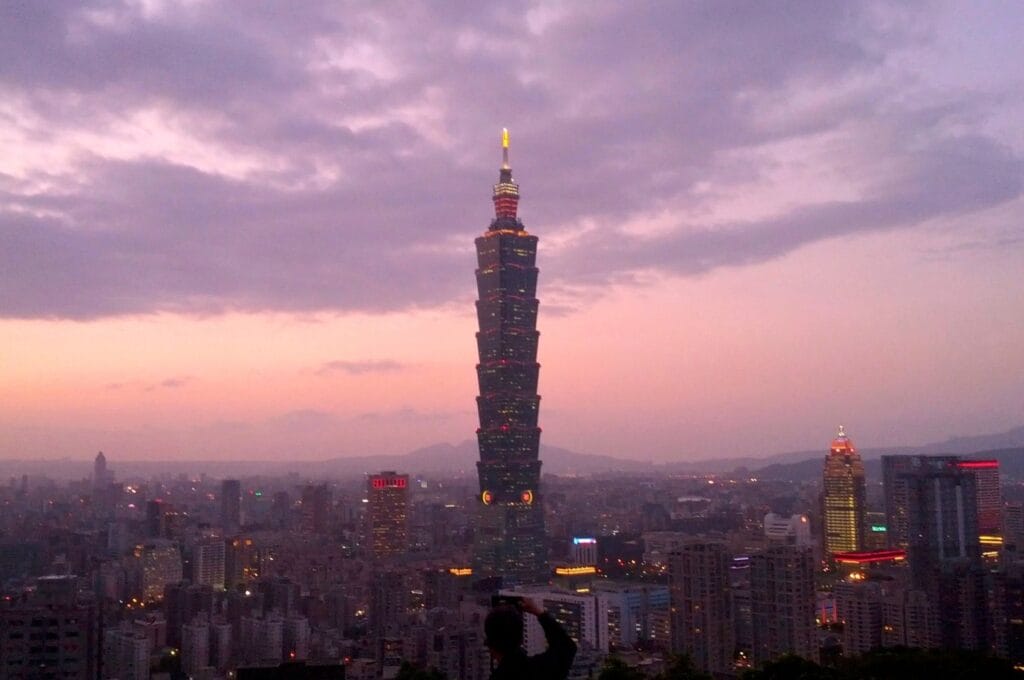
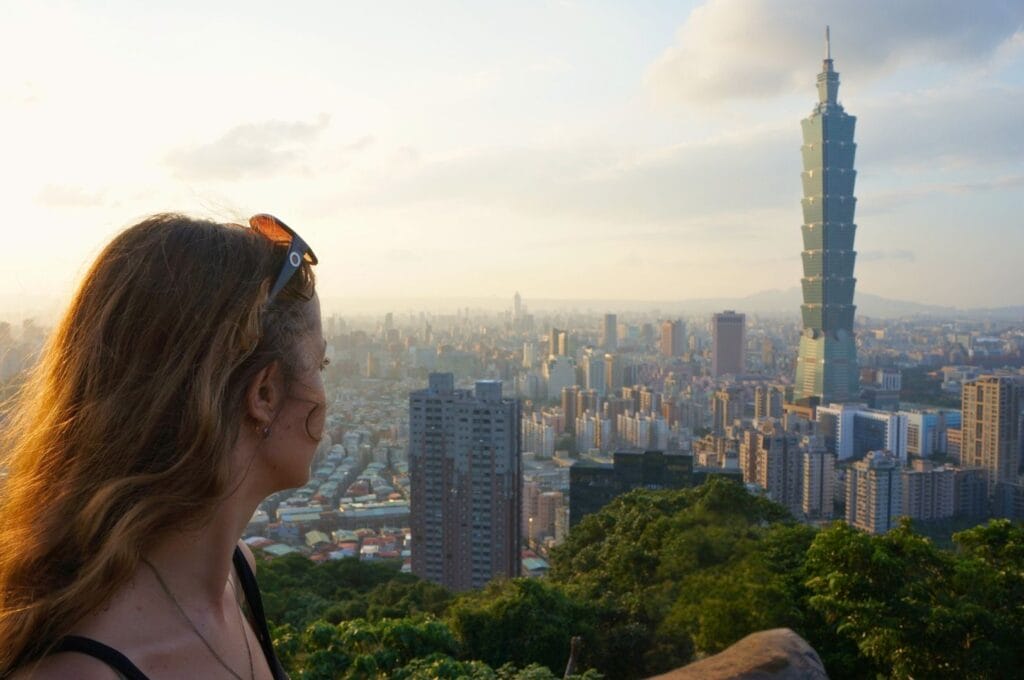
Even without making it to the observation decks of Taipei 101, we were still keen to catch a sunset over the city — and what better way than climbing a little hill that looks directly down over Taipei? As a bonus, Taipei 101 sits perfectly in your sightline from the top — which you’d obviously miss if you were inside it ;).
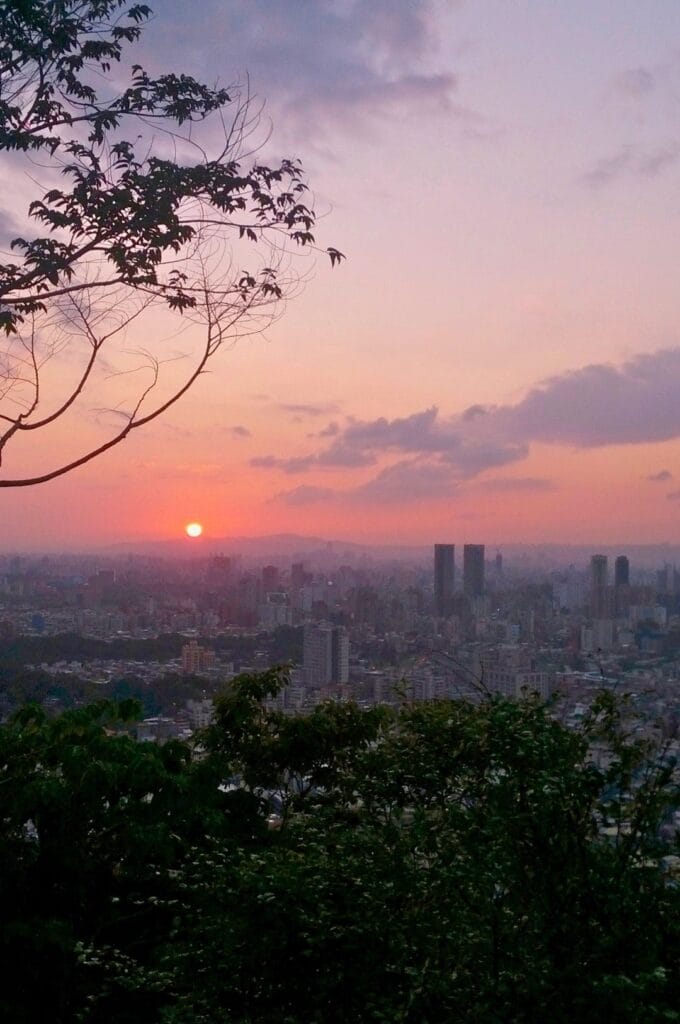
So off we went, full of motivation, to Elephant Mountain (Xiangshan) — a short urban hike with a reputation for being rather punishing, or so we’d been warned. We’d mentally prepared ourselves to arrive at the top completely breathless and dripping with sweat. But honestly? It was fine! After scaling Mount Emei in China, no staircase really phases us anymore. Once at the top, all that was left to do was sit back and let nature put on her show.
The trail is just over 1km round trip from the trailhead, but it is steep. If you have extra time, continue along the path to four additional summits — each one offers a slightly different perspective after another set of steps.
You can download the Xiangshan Trail route here.
- How to get to the Elephant Mountain: Get off at the last stop on the red MRT line, Xiangshan, and walk south through Xiangshan Park to reach the trailhead (about 5 minutes on foot).

Evening: Night markets — Linjiang or Shilin
Less serene than the temples but bursting with color, energy, and incredible food — welcome to Taipei’s night markets! Like everywhere in Asia, night markets are an institution here, and visiting one is an absolute must for soaking up the local atmosphere and treating yourself to some seriously good street food. They’re a wonderful mix of tourists, locals, and vendors from all sorts of backgrounds sharing their specialties.
Night markets are, without a doubt, the best place to eat well without spending much. For backpackers like us, the experience tends to stop there… Though I won’t pretend it was easy for me — the recovering shopaholic — to walk past all those stalls. One look at my already overstuffed backpack, however, and the urge to buy anything completely evaporated.
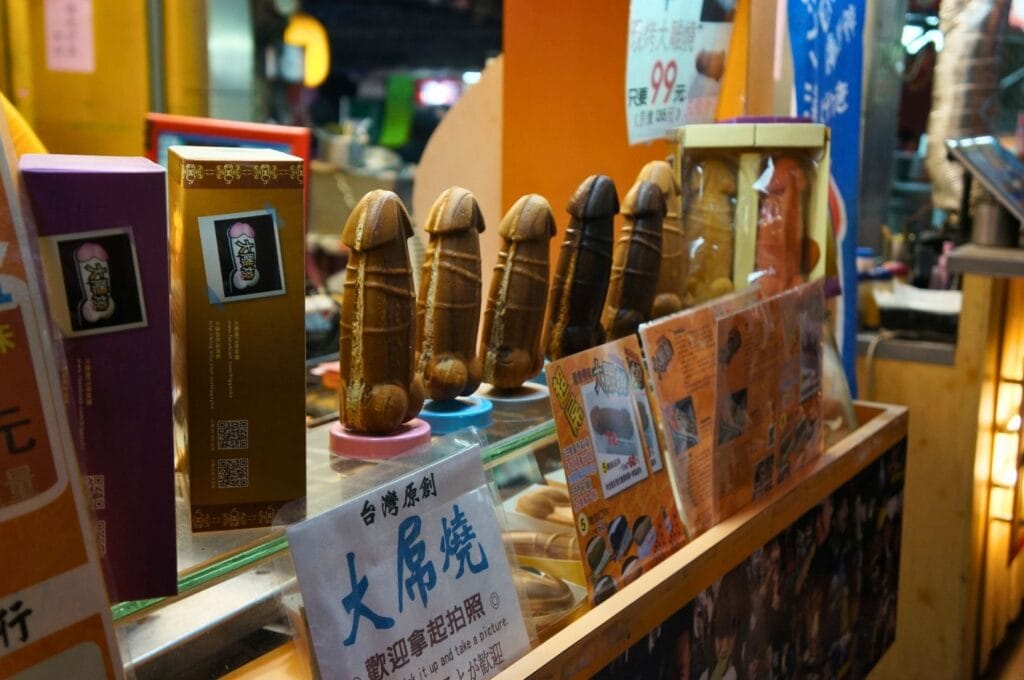
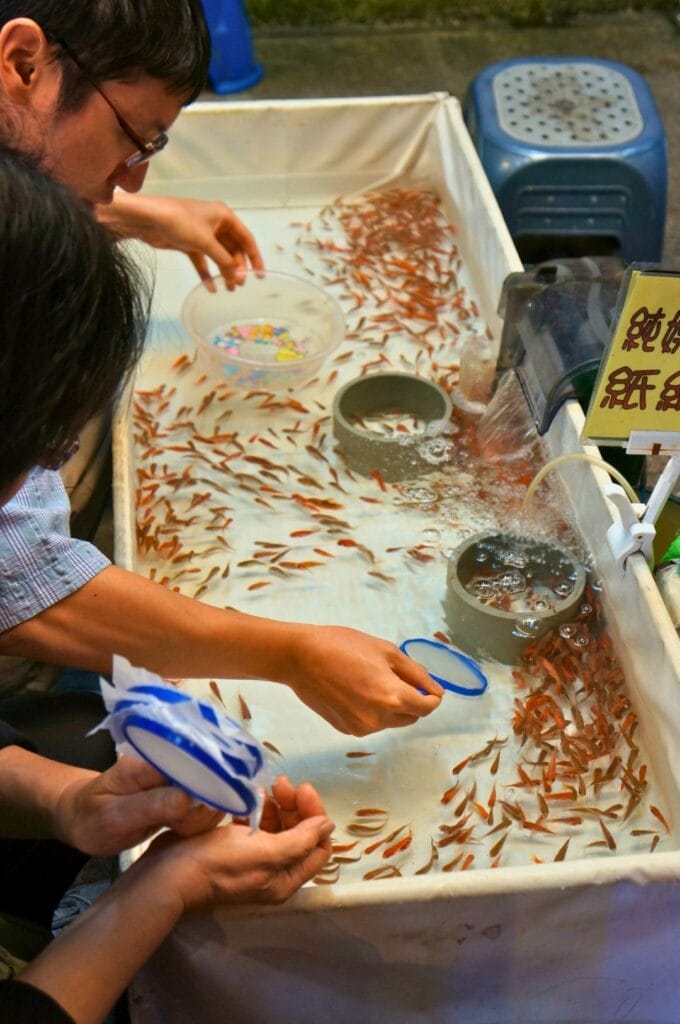
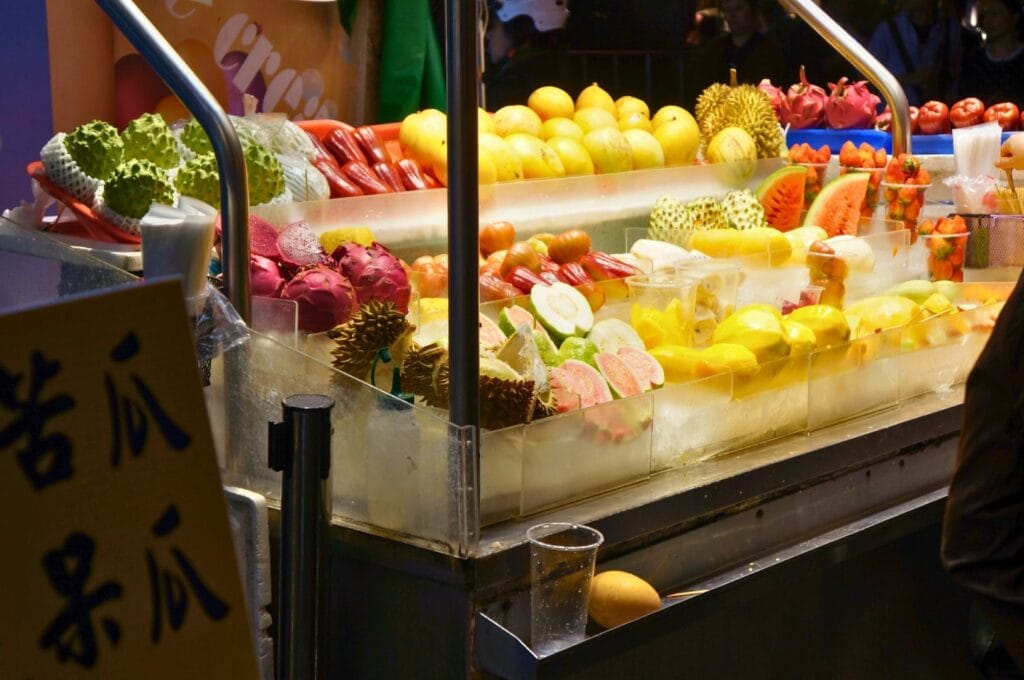
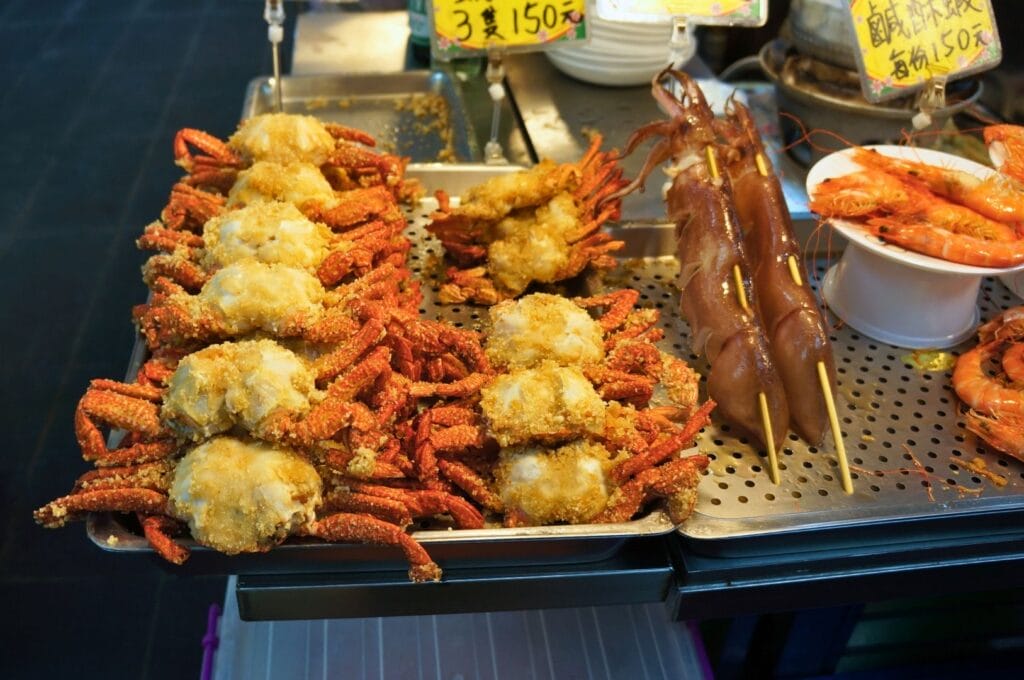
The Linjiang Night Market isn’t the biggest or the most tourist-heavy in Taipei — it’s mostly a local favorite, valued above all for its street food. If you’ve already visited night markets in Southeast Asia, Linjiang might feel a bit more low-key than what you’re used to, which is part of its charm. If you want the full, bustling experience with food, gadgets, souvenirs, and games, head to Shilin night market instead!
The food court in Shilin market‘s basement was actually the first place we tried the famous bubble tea. I had assumed it was just a slightly jazzed-up tea — I had no idea how filling it would turn out to be! Thanks to (or perhaps because of) the bubble tea, we successfully managed to resist trying the green tea-flavored Heineken that was also on offer :).
On the food front, look out for pepper buns, oyster omelettes (yes, really), and crispy fried chicken — all night market staples. For more ideas, head to our guide to Taipei’s best dishes and top food spots.

- Opening hours: Linjiang night market is open daily from 6 p.m. to midnight; Shilin night market is open daily from 4 p.m. to midnight.
- How to get there: Linjiang Night Market is a 5-minute walk from Xinyi Anhe station on the red MRT line. For the Shilin Night Market, take the red line to Jiantan station.
Day 3: Through Taipei’s historic alleyways and Ruifang
For this final day, we’re taking you into the Datong district for a quieter, more historically rich experience — followed by a memorable last stop in Jiufen.
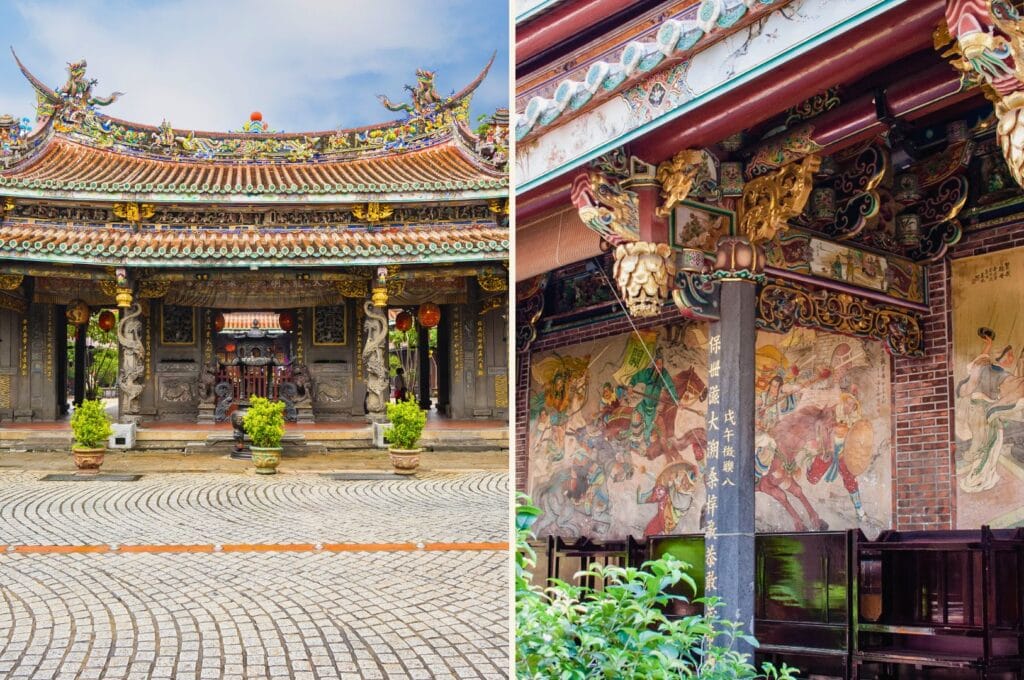
Visit Dalongdong Baoan Temple
The Baoan Temple is arguably one of the most beautiful in all of Taipei — and UNESCO actually awarded it a prize for cultural heritage conservation in Asia following its restoration. Originally built by Chinese immigrants in the early 18th century, it is dedicated to Baosheng Dadi, the god of medicine. It’s a breathtaking concentration of artistic detail: the architecture, the sculptures, the murals — all of it is extraordinary.
Tip: The Confucius Temple is right across the street. Pop in for its peaceful atmosphere and more minimalist architectural style. It’s open Tuesday to Sunday, 8:30 a.m. to 9 p.m.
- Opening hours: The Dalongdong Baoan Temple is open daily from 6 a.m to 9 p.m.
- Entry: free.
- How to get to the Dalongdong Baoan Temple: A 5–10 minute walk from Yuanshan station on the red MRT line.
Stroll along Dihua Street and the Dadaocheng neighborhood
In the Dadaocheng district — one of Taipei’s oldest — Dihua Street feels like the complete opposite of Ximending’s buzzing modernity. In fact, Dihua is Taipei’s oldest commercial street, and wandering along it feels like stepping gently back in time: herbalists, traditional shophouses, incense stores, and a welcome absence of tourist crowds.
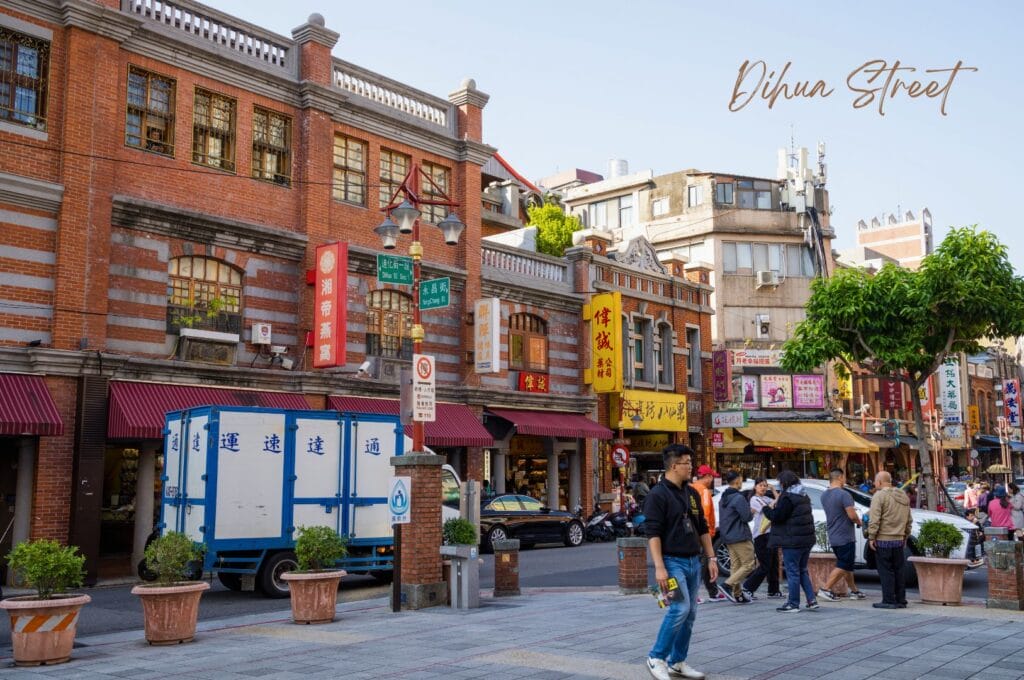
For lunch, Dihua Street is a wonderful option. If you’d like to eat by the water, the Dadaocheng Wharf Container Market nearby is a great shout too. This local market, set up in converted shipping containers along the Tamsui River, is little-known and frequented mostly by locals, making it a lovely, authentic spot to grab a bite with a sunset view.
Explore Jiufen in the Ruifang district at sunset
You could easily spend a full day — or more — in the Ruifang district. But for a 3-day Taipei trip, spending at least the evening and overnight in Jiufen is a highlight not to be missed. If you have extra time in New Taipei City, please do linger!
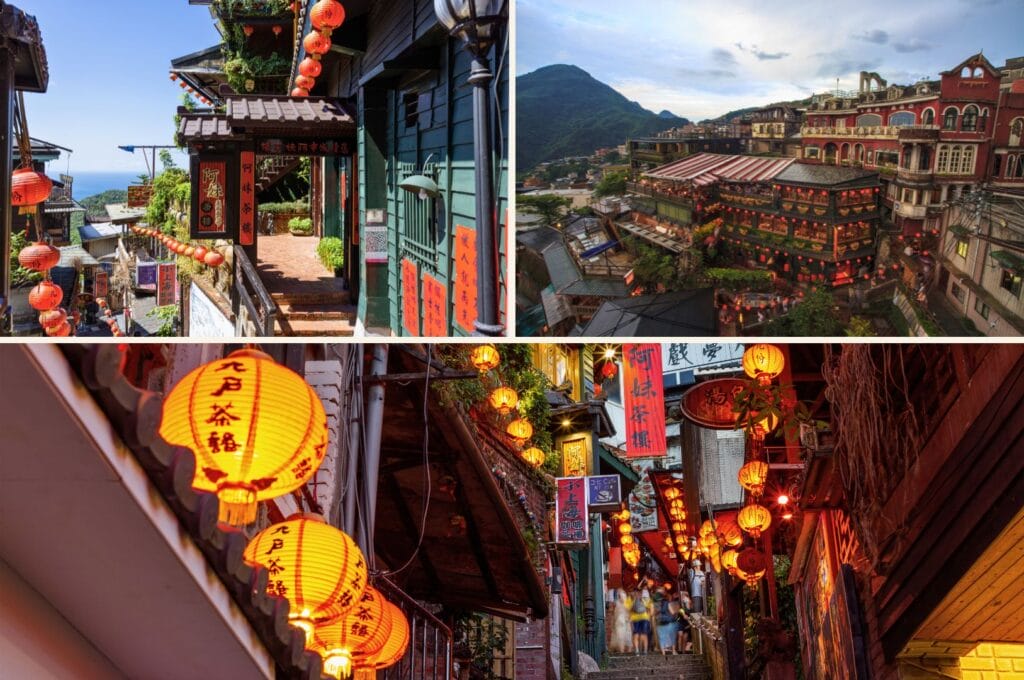
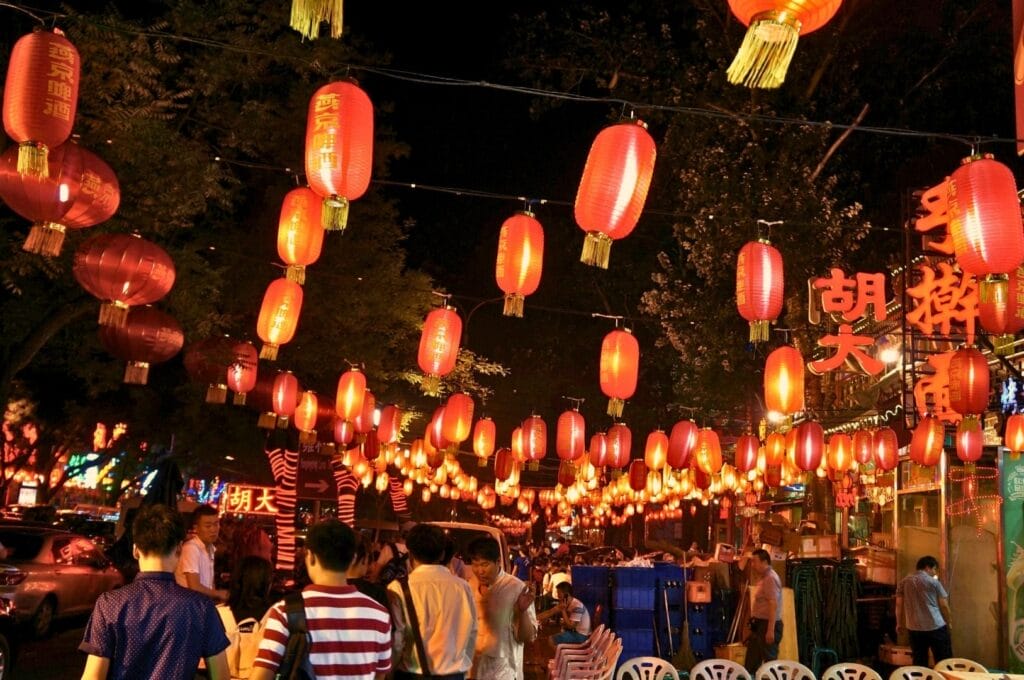
Jiufen is a village that will feel strangely familiar if you’re a fan of Hayao Miyazaki, particularly Spirited Away. Picture narrow winding alleyways, cascading red lanterns, and charming tea houses perched on the hillside. The most famous of these is the A-Mei Tea House, said to have inspired the filmmaker. This former forge was transformed into a tea salon in the wake of the mining era in the early 1900s — a period that began when gold was discovered by railway construction workers, sparking a gold rush in Jiufen.
If at all possible, stay the night in the village. Once darkness falls, the magic truly takes over, as the lanterns cast their warm glow across the stone-paved alleyways.
Tip: Short on time? Opt for an organized day tour from Taipei to cover Jiufen’s highlights along with nearby attractions like the Yehliu Geopark.
- How to get to Jiufen:
- By train: There’s no station in Jiufen itself, but trains stop at Ruifang, just 5km away. Trains run throughout the day from Taipei Main Station and take between 35 and 45 minutes. Budget around €3 per adult for a one-way ticket. You can check timetables and book tickets online in advance. Once you arrive in Ruifang, hop on a bus — or lace up your walking shoes if you’re feeling adventurous! Buses 788 and 1062 depart right outside the station and reach central Jiufen in about 15 minutes.
- By bus: Take the No. 965 shuttle from Ximending at this place (departures every 30 minutes, journey time around 1 hour 20 minutes), or board bus 1062 from Zhongxiao Fuxing station (also every 30 minutes, roughly 1 hour 30 minutes to Jiufen). Either way, the bus fare comes in at just under €3.
- On a guided tour: If you’d rather sit back and let someone else handle the logistics, joining an organized Jiufen tour is a fantastic option — return transport from Taipei is included, and you’ll get so much more out of the experience with a knowledgeable guide.
- Where to stay in Jiufen: You’ll have plenty of choices when it comes to accommodation, though prices are a touch higher than in Taipei — it is a popular tourist spot, after all! Double rooms start from around €30 per night, and dormitory beds from approximately €20. We recommend checking Booking to compare options and find the best deal.
Note: The shuttle to Jiufen is included with the FunPass.

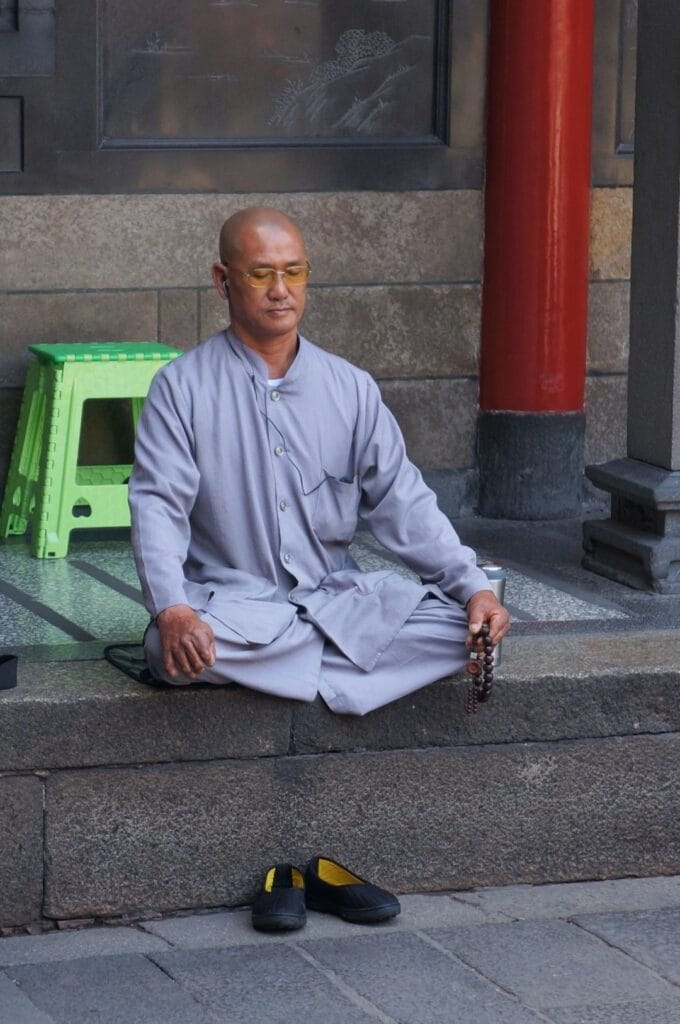
Other things to do around Taipei if you’re staying longer
Bike along the river
Rent a YouBike (Taipei’s bike-share system — details on their website) and set off on the riverside cycling paths. To discover a completely different side of the city, start from Taipei Zoo, then follow the river upstream toward the Tamsui River before finishing your ride at Dadaocheng Wharf Plaza. The full route takes about an hour without stops and covers around 20 kilometers.
Good to know: Taipei’s cycling infrastructure is excellent! YouBike rentals cost just 20 TWD (around €0.50) per hour.
Hike in Yangmingshan National Park
While Taipei has plenty of green spaces within the city, Yangmingshan National Park offers a truly immersive nature escape just a short distance from the capital. Think volcanoes (Taiwan sits on the Pacific Ring of Fire), crater lakes, the famous hot springs of Beitou right at the park’s doorstep, and a wonderful network of hiking trails through beautiful mountain scenery. In spring, the cherry blossoms transform the landscape into something out of a fairy tale.
For a full overview of the park’s activities and highlights, the official website is an excellent resource.
- Opening hours: The Yangmingshan National Park Visitor Center is open daily from 9 a.m. to 4:30 p.m.
- Entry: free.
- How to get to Yangmingshan National Park and Beitou Hot Springs: You can join a guided day tour of the area, or go independently. The Beitou hot springs and museum are within easy walking distance of Xinbeitou station on the red MRT line. For the national park itself, take bus R5 from Jiantan station (also red line) or the No. 260 shuttle from Taipei Main Station (where the red and blue lines meet). Once at the Yangmingshan bus terminal, transfer to shuttle 108. We’d recommend leaving Taipei early — the buses fill up quickly!
Visit Taroko Gorge
This was our very next stop after Taipei, and quite possibly the most spectacular natural site in the country! Since we’d been mostly on foot in Taipei, we decided to cycle along Taiwan’s east coast all the way to Taroko Gorge in the national park of the same name.
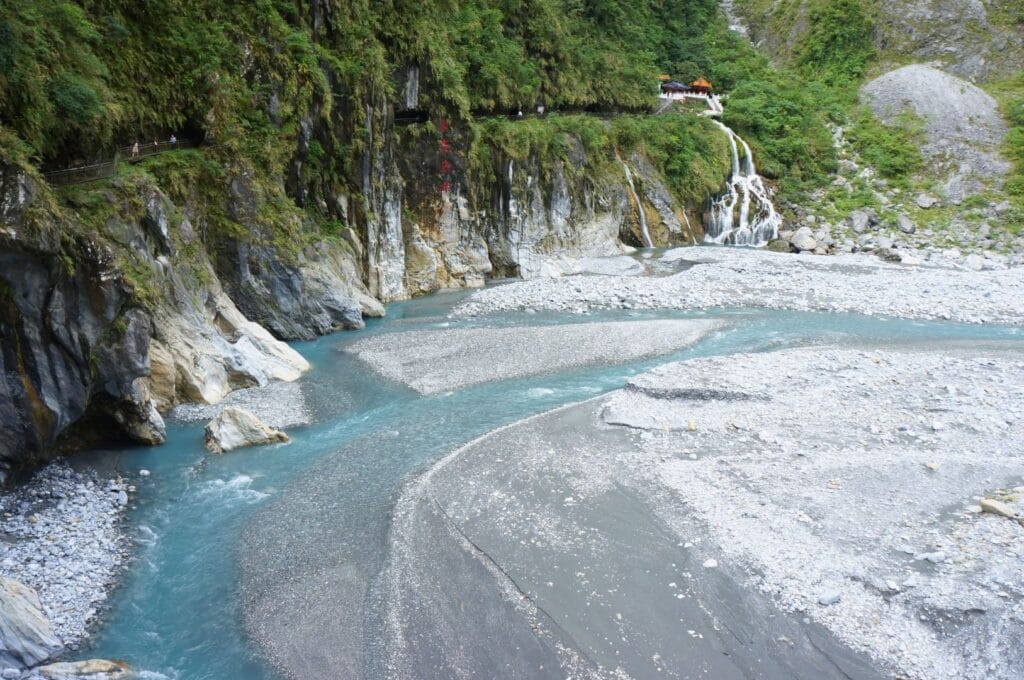
Located about two hours from Taipei by road, Taroko National Park is renowned for its dramatic marble gorges, peaks reaching 3,000 meters, extensive hiking trails, and remarkable biodiversity. It is, without doubt, one of Taiwan’s greatest natural treasures — and we have a dedicated article to help you plan your visit!
FAQ: Taipei practical info
How do I get to Taipei?
Taipei has two airports, but you’ll almost certainly arrive at Taiwan Taoyuan International Airport, located about 40 kilometers west of the city. From elsewhere in Southeast Asia, one-way flights typically cost between €50 and €150. From Europe, expect to pay around €700 per person.
To reach the city center from the airport, take the Taoyuan Airport MRT. Board the Express train (not the Commuter, which is slower) and you’ll reach Taipei Main Station in about 40 minutes. If you don’t yet have an EasyCard, you can book your ticket online for a one-way or return trip. The service runs every 15 minutes from 6 a.m. to 11 p.m.
How do I get around?
Taipei’s public transport system is excellent — comprehensive, affordable, and wonderfully efficient. The metro (MRT) is your best friend, whisking you across the city in no time. A single metro fare ranges from 20 to 65 TWD (roughly €0.50 to €1.75) depending on your destination. The city has even introduced an unlimited MRT pass starting at 135 TWD.
To make payments seamless, pick up an EasyCard — a prepaid travel card you can top up practically anywhere. It costs 100 TWD and can be used for the metro, buses, trains, taxis, bike rentals, and even at convenience stores like 7-Eleven or FamilyMart. Find all the information on this website.
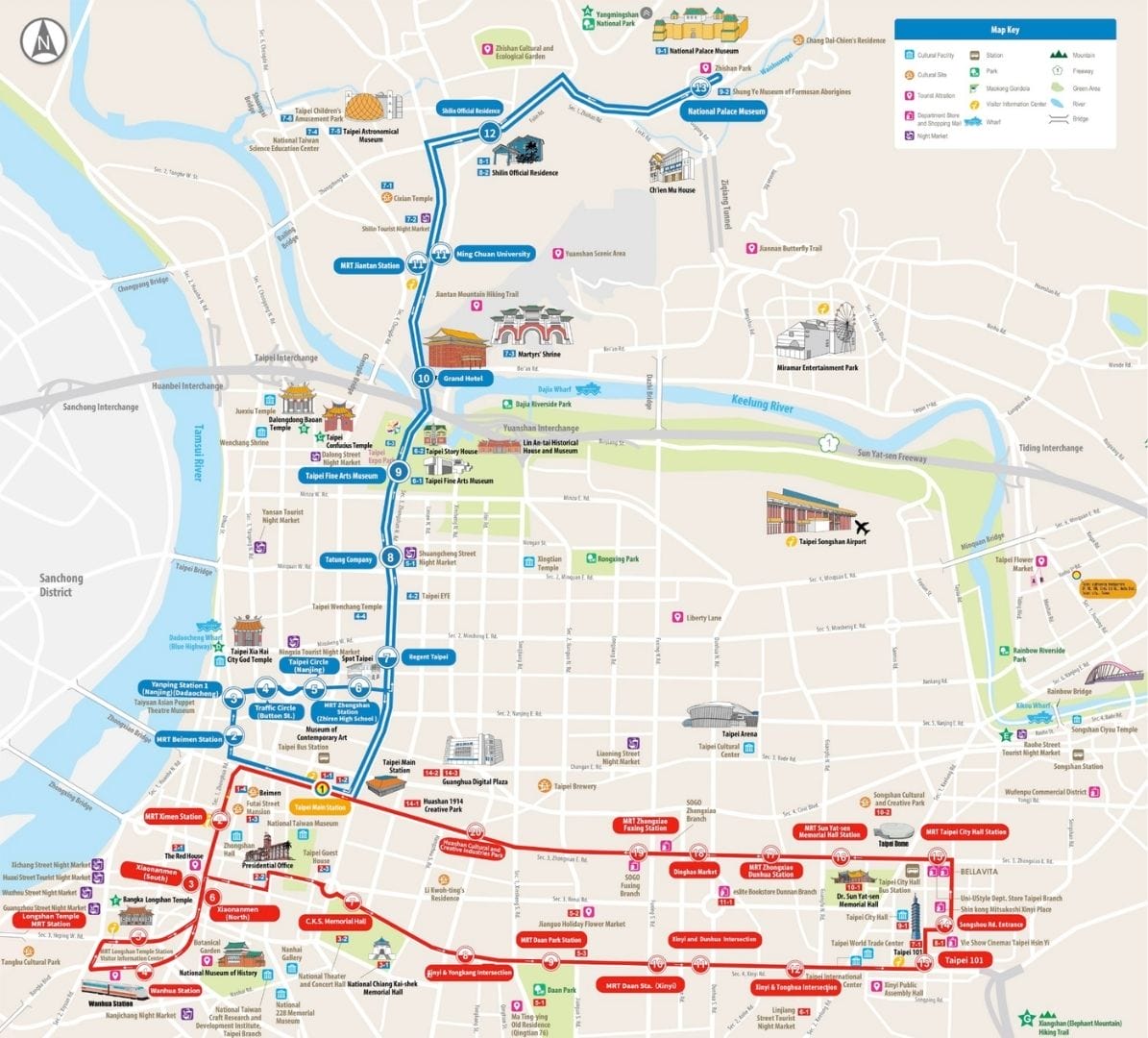
Another great way to get between the main sights is Taipei’s Hop-On Hop-Off Bus. You may well have seen these iconic double-deckers in other major cities. The principle is simple: buy a 24- or 48-hour pass and jump on and off at any of the stops shown on the map (click to enlarge).
Where should I stay?
Taipei has accommodation options to suit every budget and travel style. We’d recommend looking for something close to a metro station — areas around Ximen, Dongmen, Zhongshan, and Daqiaotou are all great bases. Hostels start from around €20 per bed and many are excellent, including the Corner Hostel & Café, Meeting Mates Hostel, and Old Door Hostel & Bar, which serves a great breakfast. If you’re after something more comfortable, there’s no shortage of quality hotels — and for a fun and unique experience, try a capsule hotel like the very central Dongmen 3.
Is the FunPass worth it?
Like many major cities, Taipei offers a FunPass that bundles entry to key attractions — including Taipei 101, the National Palace Museum, the Maokong Gondola, the National Museum, and the zoo — along with unlimited use of public transport and select shuttle services (including the ride to Jiufen). Sounds like a great deal on paper. In practice? Not quite.
The FunPass costs around €35 per adult for a single day — and it’s worth noting that it’s valid for one calendar day, not 24 hours. So if you activate it at 10 a.m., you’ll need to fit everything in before the last sites close that evening. Since most individual attractions in Taipei are already quite affordable, the savings don’t add up to much. For example, if you followed the Day 2 itinerary (the busiest day) and bought every ticket individually, you’d spend around 1,000 TWD — roughly €27. Factor in metro fares and you’d still come in under €35.
Our advice: Just get the EasyCard (purchased online) for your transport and pay for attractions individually as you go.
Where to eat
Taipei is as much a food destination as it is a cultural one, and you are genuinely in for a treat! Here are a few must-try dishes with our recommended spots:
- bubble tea: Taiwan’s most iconic drink — a blend of tea (with or without milk) and chewy tapioca pearls. Xing Fu Tang Flagship is a beloved institution, but honestly, you’ll find great bubble tea almost everywhere.
- Xia Long Bao dim sum: These delicate steamed dumplings filled with broth and meat have made the legendary Din Tai Fung (one Michelin star, but with reasonable prices) world-famous. There are several locations in Taipei — including one in the basement food court of Taipei 101 (B1 level). Tip: Book ahead online to avoid the notorious wait, or arrive early to collect a ticket before peak hours
- stinky tofu: A Taipei specialty — the name says it all, but apparently the taste far exceeds what the smell might suggest. We’ll leave that one for you to discover ;)! The Taiwanese absolutely love it, and you’ll find it at every night market.
- beef noodle soup: Another Taipei classic, and a night market staple. For the most celebrated versions, head to Yongkang Beef Noodles (near Dongmen MRT station) or Liu Shandong Beef Noodles (three blocks from Main Station). As the name suggests, it consists of noodles and beef cooked in a delicious broth.
- pineapple cake: This is THE quintessential Taiwanese dessert. Locals are crazy about this little cake filled with pineapple. The most famous bakeries in Taipei to try it are SunnyHills and Chia Te Bakery.
A quick note: You’ll likely spot beef seared with a blowtorch at various night market stalls, often marketed as a local specialty. Spoiler: it’s not really a traditional dish — it’s more of a performance than a culinary tradition.
As you’ll have gathered, Taipei is as much about eating as it is about sightseeing! To dive even deeper into the city’s food culture, we’d highly recommend joining one of Taipei’s excellent food tours.
Our verdict on Taipei
And there you have it — that’s more or less everything we saw and did in Taipei! Well, almost. Taipei also means lively student nights out, wonderful restaurants, beautiful walks along the riverside promenades, and so much more. Taiwan is a small island of just 23 million people, yet over 9 million of them live in and around Taipei. (Coming from China, we won’t pretend — it felt absolutely tiny in comparison!)
More broadly, Taiwan’s population is concentrated mainly along the western coast’s urban centers, which made it a natural choice for us to head next to the wilder, more rugged east coast — and the legendary Taroko Gorge. See you there!
P.S. — To help you plan your broader adventure on the island, we’ve put together a complete practical guide to traveling in Taiwan. Happy reading!
Pin it

Join the discussion